
Oil Prices Fall for Second Straight Week as U.S. Signals Reduced Need for Iran Deal
Why it matters
Global energy markets are pricing out the immediate probability of direct conflict escalation, pivoting instead toward the structural realities of steady output gains and permanent naval security posture.
What happened (in 30 seconds)
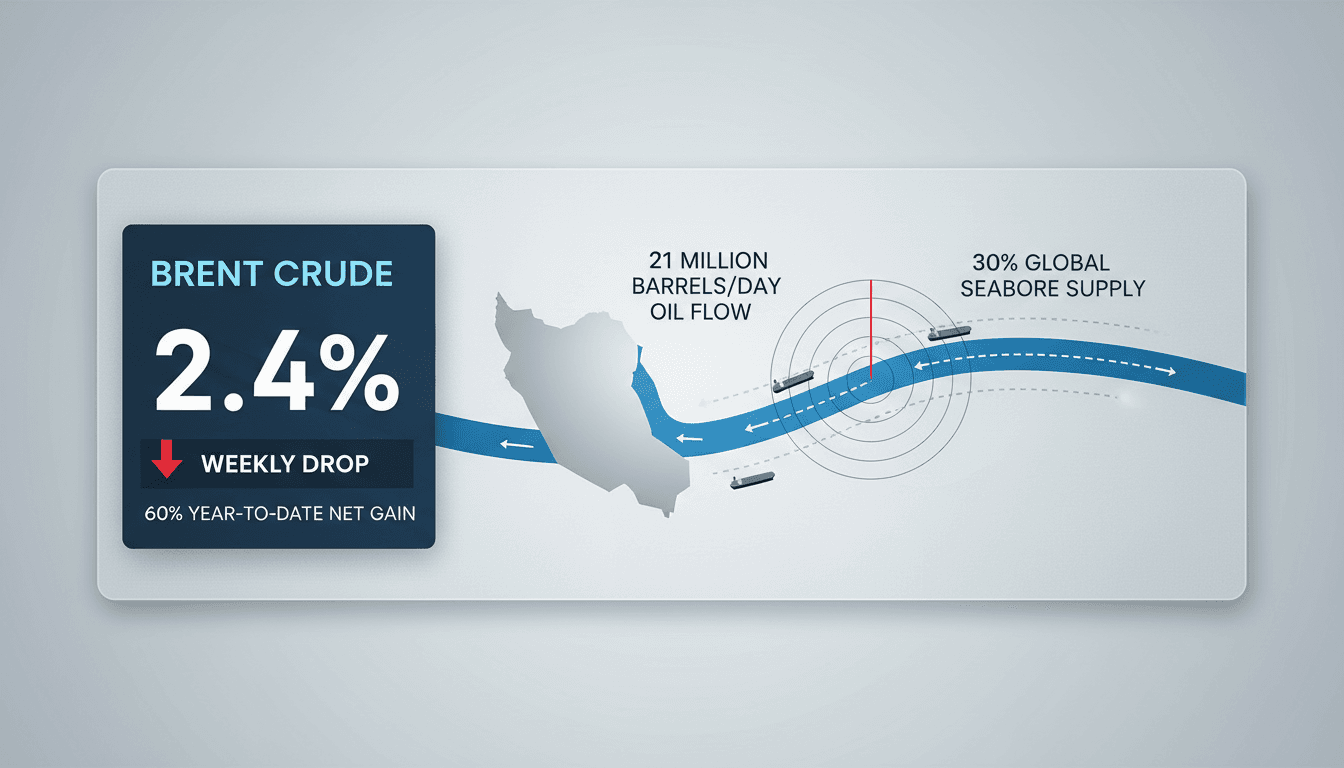
- Crude markers dropped over 2%: Brent crude fell roughly 2.4% to $95.71 per barrel and WTI declined 2.5% to $88.38 for the week ending November 14, 2026, marking their second straight weekly loss.
- Washington pivoted diplomatic focus: The U.S. executive administration indicated it no longer requires a diplomatic pact with Iran, citing existing economic leverage and maritime presence around the Strait of Hormuz, while moving Vice President JD Vance to domestic projects.
- Physical supplies continued to normalize: The retreat follows an earlier 16% weekly drop, driven by expanding Middle East crude exports and rising baseline output across key producers.
The context you actually need
- A nine-month regional conflict reset baseline pricing: Despite back-to-back weekly declines, Brent futures remain nearly 60% higher year-to-date due to cumulative maritime hazards and persistent geopolitical adjustments.
- OPEC volumes expanded into year-end: Aggregate production from OPEC members climbed to 27.16 million barrels per day in October, with recovery momentum centered in Saudi Arabia.
- Security friction points persist: Price soft-landings occurred against an operational backdrop that still includes past infrastructure strikes, targeted commercial vessel interdictions, and an active U.S. naval blockade.
What's really happening
Market participants are recalibrating how they evaluate Middle East supply security. For most of the past three quarters, risk premiums reflected the likelihood that direct confrontations would lead to an outright operational closure of critical maritime infrastructure. That specific escalation premium is receding.
By publicly asserting that Washington holds adequate economic leverage and physical access over the Strait of Hormuz, U.S. policy signals that active diplomatic negotiations are no longer viewed as the only path to deterring widespread supply disruption. Rather than pursuing an immediate diplomatic framework, Washington is substituting formal diplomacy with sustained maritime containment and enforced financial sanctions.
For commodity trading desks, this shift clarifies the primary incentive structure. An institutional strategy reliant on containment assumes that oil flow preservation does not require near-term treaty compromises. Traders who previously held protective long positions against sudden diplomatic breakdowns are unwinding those hedges. The market is pricing in an equilibrium where conflict remains confined to economic interdiction and maritime surveillance rather than kinetic expansion.
At the same time, fundamental supply indicators have resurfaced as the dominant price-setting force. October output data showed OPEC volumes expanding to 27.16 million barrels per day, demonstrating that physical barrels continue to reach export terminals despite prolonged regional strains. While infrastructure attacks and regional strikes established a high floor—keeping Brent nearly 60% above its January baseline—incremental barrels from core Middle East suppliers are counterbalancing localized risk.
Consequently, the narrative has shifted from structural scarcity toward an emerging surplus framework flagged by international energy observers. The net result is a market that treats localized security friction as an operational baseline cost rather than a catalyst for systemic supply failure. As long as physical export volumes from major Gulf producers clear transit chokepoints under naval observation, speculative premiums struggle to hold upward momentum.
Who feels it first (and how)
- Aviation and Fleet Operators: Direct fuel surcharges encounter immediate stabilization as international jet fuel and diesel feedstock values ease downward alongside prompt-month crude.
- Gulf Import-Export Hubs: Corporate logistics planners in trading centers like Dubai see near-term relief on fuel expenses, though marine insurance premiums remain elevated due to regional naval blockades.
- Energy Procurement Executives: Corporate buyers managing long-term commodity hedges gain pricing leverage as spot curves flatten, easing working capital demands for mid-size industrial processors.
- Commercial Maritime Shippers: Transit operators through the Persian Gulf face ongoing regulatory compliance hurdles and naval inspections despite declining input fuel costs.
What to watch next
- OPEC Monthly Export Revisions: Watch for changes in Saudi physical export flows to verify if the 27.16 million barrel per day output level remains stable through year-end.
- Naval Escort and Insurance Surcharges: Monitor commercial marine war-risk insurance rates in the Persian Gulf to determine if falling prompt crude prices translate into lower transport overhead.
- International Energy Agency Inventory Metrics: Track whether global commercial inventories reflect the projected supply surplus, which would confirm downward pressure on refined product spreads.
Brent crude and WTI benchmarks completed a second consecutive week of losses, falling approximately 2.4% and 2.5% respectively, with Brent settling near $95.71.
Energy trading desks will continue discounting the prospect of a near-term regional diplomatic breakthrough, choosing instead to focus on fundamental OPEC supply data and economic sanctions enforcement.
Whether persistent naval interdictions and enforcement along the Strait of Hormuz will trigger secondary, localized supply disruptions that interrupt the current price descent.
Frequently Asked Questions
- Why it matters?
- Global energy markets are pricing out the immediate probability of direct conflict escalation, pivoting instead toward the structural realities of steady output gains and permanent naval security posture.
- What happened (in 30 seconds)?
- Crude markers dropped over 2%: Brent crude fell roughly 2.4% to $95.71 per barrel and WTI declined 2.5% to $88.38 for the week ending November 14, 2026, marking their second straight weekly loss. Washington pivoted diplomatic focus: The U.S. executive administration indicated it no longer requires a diplomatic pact with Iran, citing existing economic leverage and maritime presence around the Strait of Hormuz, while moving Vice President JD Vance to domestic projects. Physical supplies continued
- What's really happening?
- Market participants are recalibrating how they evaluate Middle East supply security. For most of the past three quarters, risk premiums reflected the likelihood that direct confrontations would lead to an outright operational closure of critical maritime infrastructure. That specific escalation premium is receding. By publicly asserting that Washington holds adequate economic leverage and physical access over the Strait of Hormuz, U.S. policy signals that active diplomatic negotiations are no l
- Who feels it first (and how)?
- Aviation and Fleet Operators: Direct fuel surcharges encounter immediate stabilization as international jet fuel and diesel feedstock values ease downward alongside prompt-month crude. Gulf Import-Export Hubs: Corporate logistics planners in trading centers like Dubai see near-term relief on fuel expenses, though marine insurance premiums remain elevated due to regional naval blockades. Energy Procurement Executives: Corporate buyers managing long-term commodity hedges gain pricing leverage as s
- What to watch next?
- OPEC Monthly Export Revisions: Watch for changes in Saudi physical export flows to verify if the 27.16 million barrel per day output level remains stable through year-end. Naval Escort and Insurance Surcharges: Monitor commercial marine war-risk insurance rates in the Persian Gulf to determine if falling prompt crude prices translate into lower transport overhead. International Energy Agency Inventory Metrics: Track whether global commercial inventories reflect the projected supply surplus, whic
Oil, metals, and agriculture: supply/demand headlines, OPEC chatter, inventories, and price action.
"Solid tape for energy and metals traders tracking macro and micro catalysts."
— A47 Editor
Oil prices fall over 2% for the week amid easing fears of fresh U.S.-Iran fighting
Oil prices fell more than 2% over the week, according to Investing.com, as concerns eased about renewed fighting between the United States and Iran. The article is categorized under markets and carries a neutral sentiment.
Global markets, investing, and macroeconomics from a premier financial newsroom.
"Bloomberg is respected for in-depth financial reporting and data-driven analysis."
— A47 Editor
Latest Oil Market News and Analysis for Nov. 13
Oil prices held a gain after U.S. President Donald Trump said the United States could forgo a deal with Iran, dimming prospects for a breakthrough to end the war that has disrupted Middle East oil supplies, according to Bloomberg's markets coverage.
Global political, business, and cultural coverage from WSJ international desks.
"The Wall Street Journal offers extensive international reporting with a reputation for financial insight and a center-right editorial stance."
— A47 Editor
Oil Prices Rebound as Trump Questions Need for Iran Deal
Oil prices rebounded from initial losses and closed higher after President Donald Trump said the United States does not need a deal with Iran, a remark that restored some risk premium to the market.