
IEA Projects Fourth-Quarter Oil Surplus of 1.7 Million Barrels Per Day as Middle East Exports Recover
Why it matters
The return to a physical crude surplus dismantles months of deficit pricing, proving that supply-chain adaptation and elevated-price demand destruction are currently outpacing the headline risks of regional conflict.
What happened (in 30 seconds)
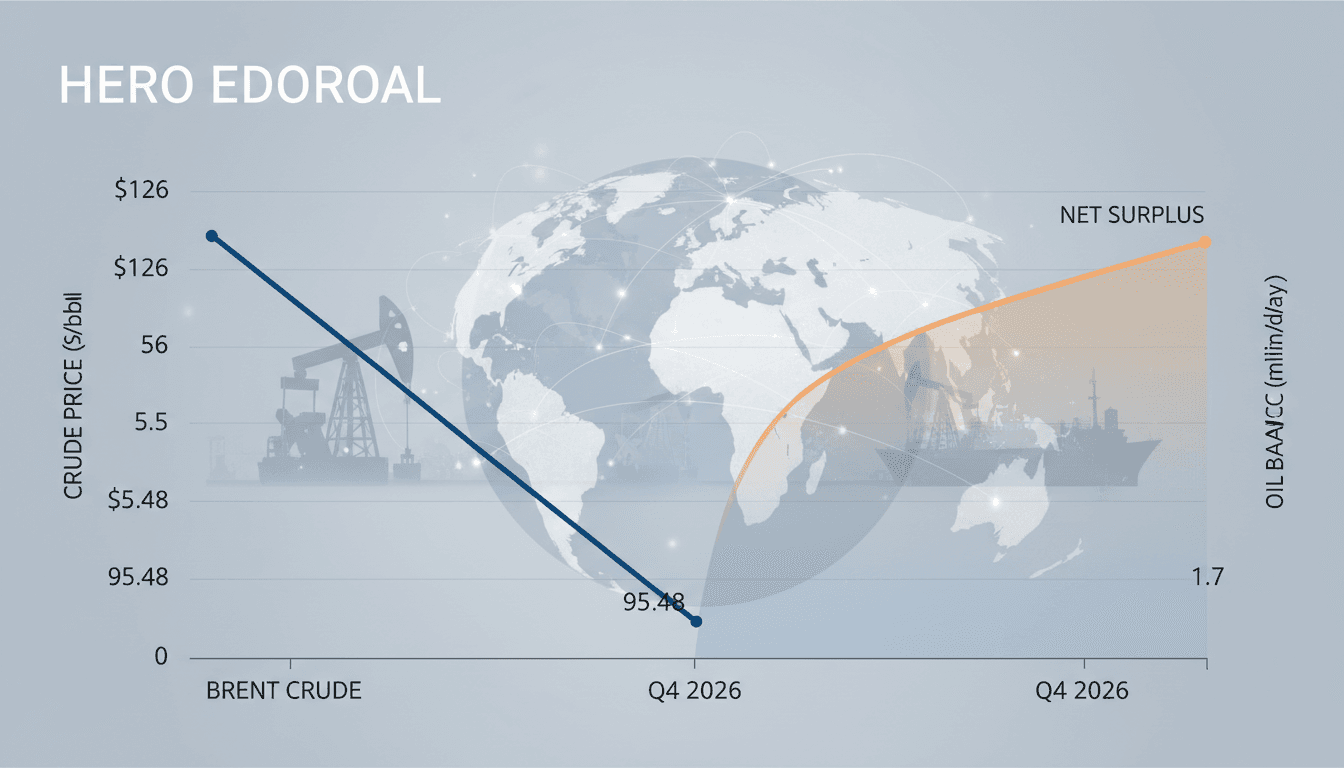
- Crude benchmarks dropped on November 16, 2026, with front-month Brent falling 0.4% to $95.48 per barrel and WTI slipping 0.1% to $88.49 per barrel.
- The International Energy Agency projected a fourth-quarter market surplus of approximately 1.7 million barrels per day, marking the first structural oversupply condition since the Iran war started.
- Supply recovered faster than expected across primary Middle Eastern crude export corridors, neutralizing market panic even after a direct attack on Bahrain early Sunday amid stalled U.S.-Iran diplomatic talks.
The context you actually need
- The February 2026 price spike pushed crude benchmarks above $126 per barrel after initial military engagements severely restricted tanker transit through the Strait of Hormuz.
- Demand destruction set in over subsequent quarters, as sustained triple-digit energy costs compressed consumption across major importing economies and accelerated industrial efficiency measures.
- Upstream export volumes rebounded toward pre-conflict baseline levels for unrefined crude, though regional downstream capacity and refined petroleum product flows continue to face operational bottlenecks.
What's really happening
The global oil market is executing a pivot from geopolitical panic pricing to fundamentals-driven rebalancing. For three quarters, crude valuations carried an aggressive war premium designed to hedge against a systemic export shutdown from the Persian Gulf. When the conflict expanded in late February 2026, the physical disruption of key shipping lanes justified Brent trading north of $126 per barrel. However, prolonged exposure to extreme prices initiated an aggressive demand-side contraction, blunting the impact of supply bottlenecks.
Under the surface, the physical delivery mechanism has adjusted faster than futures markets anticipated. Producers in Saudi Arabia and the UAE deployed alternative routing and logistical workarounds to restore crude shipments, bringing total regional export volumes back near pre-war capacity. While refined product supply remains constricted due to specialized processing vulnerabilities, raw crude is moving into international maritime lanes at volumes sufficient to overwhelm current global intake capacity.
According to the International Energy Agency, the net result is an expected fourth-quarter surplus of 1.7 million barrels per day. This surplus is fundamentally altering institutional trading incentives. In early 2026, trading desks aggressively bought contract dips to protect against physical inventory exhaustion. Now, participants are discounting kinetic military friction—including recent strikes on Bahrain and the diplomatic standstill between Washington and Tehran—because aggregate physical supply exceeds immediate consumption.
The mechanism at play is pure price elastic rationing. High energy costs acted as a ceiling on global industrial run rates. With emerging markets and high-intake manufacturers operating on suppressed run schedules, the recovery of baseline Middle Eastern crude creates a supply overhang. The financial architecture of oil trading requires real, physical storage uptake to support elevated futures curves; as land and floating inventories accumulate that 1.7 million barrel per day excess, prompt prices must soften to incentivize storage and clear excess volume.
For regional hubs, this shift recalibrates economic incentives. Prolonged high prices generated substantial windfalls that buffered state balance sheets against wartime spending. A transition to structural surplus softens headline transport and energy operating costs for domestic businesses, but it introduces renewed fiscal pressure on long-term capital outlays if production quotas must be reconsidered to defend baseline revenues.
Who feels it first (and how)
- Global logistics and freight operators capture immediate margin relief as diesel and heavy fuel surcharges ease in line with falling international crude benchmarks.
- Corporate procurement directors in energy-intensive manufacturing can secure lower fourth-quarter physical supply contracts and unwind expensive options hedges against triple-digit crude.
- Households and transport-reliant enterprises in Dubai observe gradual declines in pump prices and general logistics fees, offsetting sustained baseline cost-of-living expenses.
- Regional state treasury planners face renewed discipline in sovereign cash-flow management as gross export receipts begin to normalize away from wartime windfall highs.
What to watch next
- Strait of Hormuz physical transit volume, because any renewed, verified physical blockade would instantly erase the calculated 1.7 million barrel per day surplus.
- Refined product crack spreads, because the divergence between recovering raw crude exports and lagging fuel processing margins dictates true retail fuel costs.
- Diplomatic developments between Washington and Tehran, because formal treaty progress or total breakdown will redefine the speed at which global market buffers clear.
Global crude supply is forecast to run at an oversupply of 1.7 million barrels per day in Q4 2026; Brent sits at $95.48 and WTI at $88.49.
Energy-driven headline inflation across importing nations will cool into the first quarter of 2027 if crude export levels remain near baseline.
Whether refining capacity can recover quickly enough to prevent localized refined-fuel shortages even as raw crude inventories swell.
Frequently Asked Questions
- Why it matters?
- The return to a physical crude surplus dismantles months of deficit pricing, proving that supply-chain adaptation and elevated-price demand destruction are currently outpacing the headline risks of regional conflict.
- What happened (in 30 seconds)?
- Crude benchmarks dropped on November 16, 2026, with front-month Brent falling 0.4% to $95.48 per barrel and WTI slipping 0.1% to $88.49 per barrel. The International Energy Agency projected a fourth-quarter market surplus of approximately 1.7 million barrels per day, marking the first structural oversupply condition since the Iran war started. Supply recovered faster than expected across primary Middle Eastern crude export corridors, neutralizing market panic even after a direct attack on Bahrai
- What's really happening?
- The global oil market is executing a pivot from geopolitical panic pricing to fundamentals-driven rebalancing. For three quarters, crude valuations carried an aggressive war premium designed to hedge against a systemic export shutdown from the Persian Gulf. When the conflict expanded in late February 2026, the physical disruption of key shipping lanes justified Brent trading north of $126 per barrel. However, prolonged exposure to extreme prices initiated an aggressive demand-side contraction, b
- Who feels it first (and how)?
- Global logistics and freight operators capture immediate margin relief as diesel and heavy fuel surcharges ease in line with falling international crude benchmarks. Corporate procurement directors in energy-intensive manufacturing can secure lower fourth-quarter physical supply contracts and unwind expensive options hedges against triple-digit crude. Households and transport-reliant enterprises in Dubai observe gradual declines in pump prices and general logistics fees, offsetting sustained base
- What to watch next?
- Strait of Hormuz physical transit volume, because any renewed, verified physical blockade would instantly erase the calculated 1.7 million barrel per day surplus. Refined product crack spreads, because the divergence between recovering raw crude exports and lagging fuel processing margins dictates true retail fuel costs. Diplomatic developments between Washington and Tehran, because formal treaty progress or total breakdown will redefine the speed at which global market buffers clear.
Markets desk coverage, trading insights, and investor updates.
"WSJ’s markets reporting provides in-depth analysis and context for investors."
— A47 Editor
Oil Edges Lower as Supply Surplus Prospects Offset Mideast Tensions
Oil prices edged lower as prospects for a global supply surplus offset ongoing Middle East tensions, according to The Wall Street Journal, though losses were expected to be limited by the risk of supply disruptions tied to continuing regional instabi...
Oil, metals, and agriculture: supply/demand headlines, OPEC chatter, inventories, and price action.
"Solid tape for energy and metals traders tracking macro and micro catalysts."
— A47 Editor
Oil prices dip as markets look to recovering supplies, M.East tensions
Oil prices dipped as markets weighed recovering supplies against ongoing tensions in the Middle East, according to Investing.com. The base report frames the move as a neutral market reaction to the balance between returning flows and geopolitical ris...
Global markets, investing, and macroeconomics from a premier financial newsroom.
"Bloomberg is respected for in-depth financial reporting and data-driven analysis."
— A47 Editor
Latest Oil Market News and Analysis for Nov. 16
Oil prices steadied after a two-week slump, according to Bloomberg's markets coverage for Nov. 16, as fresh attacks in the Middle East offset signs of a well-supplied physical market and kept supply concerns in focus.
U.S. business news, corporate developments, and economy.
"The Wall Street Journal is respected for deep financial and economic reporting with a center-right editorial perspective."
— A47 Editor
Crude Futures Post Back-to-Back Weekly Losses
Oil futures fell for a second consecutive week, as traders weighed the International Energy Agency's outlook for a global supply surplus, continued disruptions to Middle Eastern oil shipments, and fading expectations for a negotiated settlement betwe...