
US Strikes Iranian Air Defenses on Qeshm Island as Qatar-Mediated Nuclear Talks Advance
Why it matters
Targeted interdiction operations inside the Strait of Hormuz directly govern the baseline pricing of global maritime shipping insurance, fuel surcharges, and crude availability.
What happened (in 30 seconds)
* Targeted strikes confirmed: On November 6–7, 2026, U.S. forces executed a rapid operation neutralizing an Iranian anti-aircraft installation on Qeshm Island in the Suza district within minutes. * Dual-track pressure: The kinetic action coincided with high-stakes mediation coordinated by Qatar, intended to return International Atomic Energy Agency inspectors to Iranian facilities. * Maritime blockade enforcement: The strike reinforced the operational reach of the newly established U.S. Task Force Iron Gate, designed to restrict sanctioned trade and interdict weapons.
The context you actually need
* Prolonged operational friction: The strike fits into an active cycle that began in February 2026, following earlier operations in 2025 that compromised Iranian air defense systems and nuclear infrastructure. * High-stakes financial blockage: An estimated $25 billion worth of Iranian crude oil remains stranded behind the ongoing U.S. naval blockade inside the Strait of Hormuz. * Political realignment: The deployment occurred immediately following the November 2026 U.S. midterm elections, creating fresh parameters for diplomatic negotiations.
What's really happening
The military operation on Qeshm Island is an exercise in calibrated enforcement, not open conflict expansion. By targeting a newly erected anti-aircraft installation immediately adjacent to the Strait of Hormuz, the operational objective was mechanical: prevent anti-access systems from contesting naval airspace along the world's most critical petroleum bottleneck.
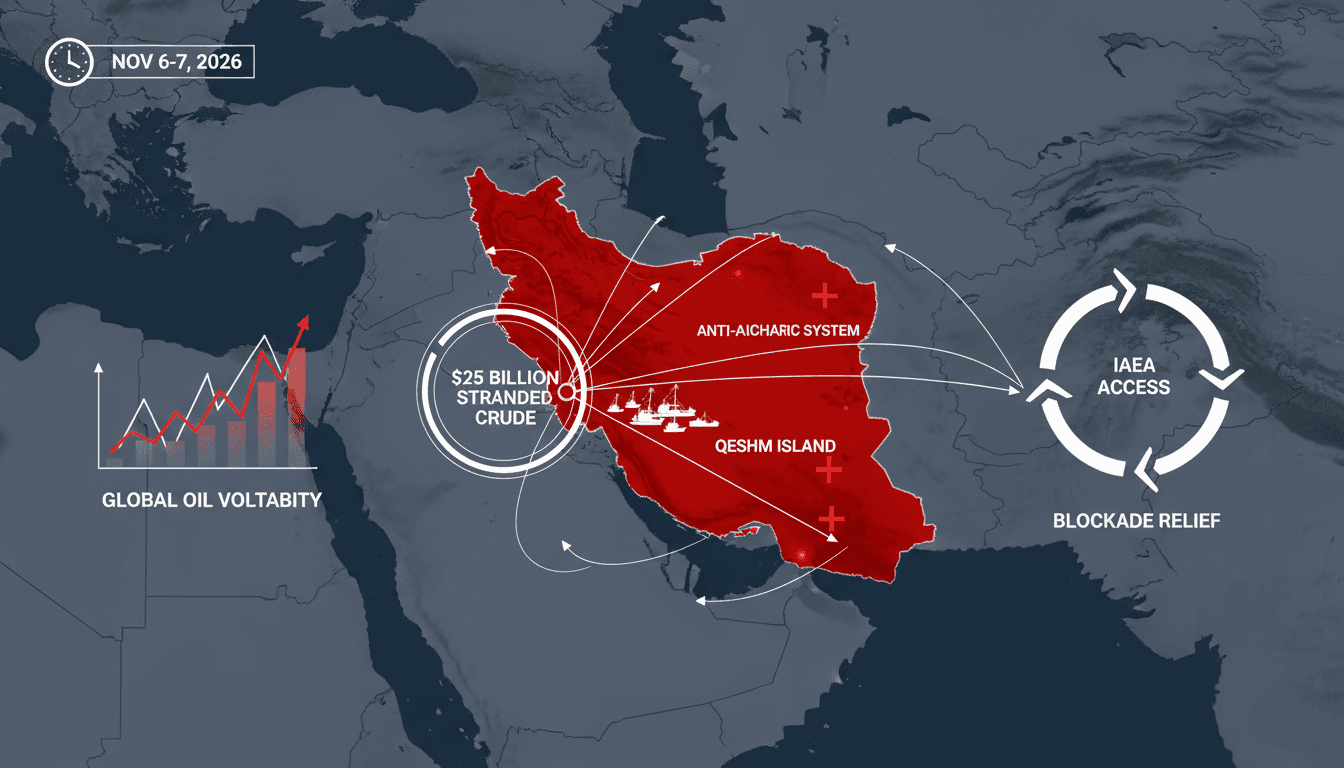
The underlying mechanism operates on linked diplomatic and economic incentives. The U.S. established Task Force Iron Gate to maintain an active maritime blockade that has immobilized $25 billion in Iranian crude oil assets. Simultaneously, U.S. officials announced a $20 million reward for intelligence regarding nuclear enrichment sites. These leverage points are designed to produce a specific diplomatic result: compelling Tehran to permit International Atomic Energy Agency (IAEA) inspectors back into previously restricted nuclear installations.
Qatar’s mediation framework relies on an explicit quid-pro-quo architecture. In exchange for formal nuclear verification access, the proposal outlines partial relief from the maritime blockade alongside the phased release of frozen sovereign capital. By conducting limited, highly localized strikes instead of broader offensive campaigns, U.S. Central Command demonstrated the capability to dismantle defensive hardware without derailing ongoing mediated talks led by Prime Minister Mohammed bin Abdulrahman Al Thani.
Tehran’s response underscores this calculated posture. Iranian foreign leadership conducted outreach to 12 foreign ministers rather than executing retaliatory maritime attacks. Iran’s core economic incentive remains freeing the $25 billion in bottled-up crude to stabilize domestic balance sheets. For regional hubs like Dubai, the stability of this corridor dictates logistics pricing. As long as the Strait remains an active contested zone, maritime logistics operators must price in extended insurance premiums, rerouted tanker paths, and inventory buffers. The strikes on Qeshm Island signal that freedom of navigation through Hormuz will be enforced via immediate kinetic removal of any new coastal defensive installations.
Who feels it first (and how)
* Maritime Freight & Logistics Operators: Vessel operators running Gulf routes absorb immediate adjustments to war-risk premiums and must verify escort protocols managed by Task Force Iron Gate. * Energy Traders and Risk Analysts: Commodity desks must price localized volatility as the market balances physical crude blockades against mediated supply-relief scenarios. * Dubai Corporate Supply Chains: Regional enterprise leaders face extended transit times and fluctuating port service costs tied to regional maritime transit delays. * Regional Infrastructure Financiers: Capital allocators reassess infrastructure risk ratings for coastal developments operating within proximity to contested naval chokepoints.
What to watch next
* IAEA Verification Timelines: Movement on verified access arrangements across Iranian nuclear infrastructure will signal the immediate trajectory of blockade relief. * Task Force Iron Gate Operational Footprint: Continued boardings or secondary interdictions within the Strait will reveal the enforcement threshold for commercial tankers. * Energy Release Thresholds: Any phased release of the $25 billion in halted crude shipments will trigger shifts in baseline global oil pricing.
U.S. forces neutralized an Iranian anti-aircraft installation on Qeshm Island in November 2026, and Qatar is actively mediating nuclear inspection frameworks.
Maritime insurance premiums for commercial vessels transiting the Strait of Hormuz will maintain elevated baselines until formal inspection accords are signed.
Whether Tehran will formally accept comprehensive IAEA monitoring protocols in exchange for the proposed financial and maritime concessions.
Frequently Asked Questions
- Why it matters?
- Targeted interdiction operations inside the Strait of Hormuz directly govern the baseline pricing of global maritime shipping insurance, fuel surcharges, and crude availability.
- What happened (in 30 seconds)?
- Targeted strikes confirmed: On November 6–7, 2026, U.S. forces executed a rapid operation neutralizing an Iranian anti-aircraft installation on Qeshm Island in the Suza district within minutes. Dual-track pressure: The kinetic action coincided with high-stakes mediation coordinated by Qatar, intended to return International Atomic Energy Agency inspectors to Iranian facilities. Maritime blockade enforcement: The strike reinforced the operational reach of the newly established U.S. Task Force Iro
- What's really happening?
- The military operation on Qeshm Island is an exercise in calibrated enforcement, not open conflict expansion. By targeting a newly erected anti-aircraft installation immediately adjacent to the Strait of Hormuz, the operational objective was mechanical: prevent anti-access systems from contesting naval airspace along the world's most critical petroleum bottleneck. The underlying mechanism operates on linked diplomatic and economic incentives. The U.S. established Task Force Iron Gate to maintai
- Who feels it first (and how)?
- Maritime Freight & Logistics Operators: Vessel operators running Gulf routes absorb immediate adjustments to war-risk premiums and must verify escort protocols managed by Task Force Iron Gate. Energy Traders and Risk Analysts: Commodity desks must price localized volatility as the market balances physical crude blockades against mediated supply-relief scenarios. Dubai Corporate Supply Chains: Regional enterprise leaders face extended transit times and fluctuating port service costs tied to regio
- What to watch next?
- IAEA Verification Timelines: Movement on verified access arrangements across Iranian nuclear infrastructure will signal the immediate trajectory of blockade relief. Task Force Iron Gate Operational Footprint: Continued boardings or secondary interdictions within the Strait will reveal the enforcement threshold for commercial tankers. Energy Release Thresholds: Any phased release of the $25 billion in halted crude shipments will trigger shifts in baseline global oil pricing.
Breaking news, politics, business, and entertainment from the U.S. and around the world.
"The New York Post is a tabloid-format newspaper known for its sensationalist headlines and conservative-leaning editorial tone."
— A47 Editor
Trump confirms fresh US strikes on Iran defenses as talks turn to nuke inspectors
President Trump confirmed Friday night that the U.S. military carried out new strikes on Iranian air defense systems on Qeshm Island in the Strait of Hormuz, the first such strikes since the midterm elections, while stating that Iran "wants to make a...
Capitol Hill news, legislation, and policy insight.
"The Hill specializes in U.S. politics and policy, with a focus on Capitol Hill developments and a reputation for insider reporting."
— A47 Editor
US military targets Iranian defense system in latest round of limited strikes
The U.S. military launched new limited strikes against Iran targeting its air defense systems, President Trump said on Friday, describing them as "minor." The action follows an earlier U.S. strike on Monday, a day before the midterm elections, that h...
Global news coverage with extensive reporting on Middle Eastern conflicts and geopolitics.
"Al Jazeera is a Qatar-based broadcaster known for wide regional coverage and alternative perspectives."
— A47 Editor
Trump confirms US strikes in Iran, insists ‘it’s not a war’
Trump confirmed that US forces carried out what he called "minor strikes" on Iran's Qeshm Island, while insisting the action "is not a war," according to Al Jazeera's reporting on the developments.
Comprehensive coverage of Middle Eastern and global issues.
"Al Jazeera is a prominent voice from the Global South, especially the Middle East, with an emphasis on underreported stories."
— A47 Editor
Trump confirms new US strikes on Iran’s Qeshm island
Trump confirmed new US strikes on Iran's Qeshm island, according to Al Jazeera, while also claiming "a lot of progress" in Washington's negotiations with Tehran. The development comes amid an ongoing conflict that has run for roughly eight months and...
Global news coverage with extensive reporting on Middle Eastern conflicts and geopolitics.
"Al Jazeera is a Qatar-based broadcaster known for wide regional coverage and alternative perspectives."
— A47 Editor
Trump confirms new US strikes on Iran’s Qeshm island
Trump confirmed new US strikes on Iran's Qeshm island, according to Al Jazeera, while also claiming "a lot of progress" in Washington's negotiations with Tehran. The development comes amid an ongoing conflict that has run for roughly eight months and...
International coverage from The Guardian's global desks.
"The Guardian is known for its progressive editorial stance and in-depth analysis."
— A47 Editor
US carries out another round of ‘minor’ strikes on Iran, Trump says
US President Donald Trump said on Friday that American forces carried out a new round of limited strikes on Iran, targeting an air defence system, which he described as "minor." Iranian state media reported two explosions in the Suza area of Qeshm Is...
Capitol Hill news, legislation, and policy insight.
"The Hill specializes in U.S. politics and policy, with a focus on Capitol Hill developments and a reputation for insider reporting."
— A47 Editor
Iran strikes kept quiet during midterm homestretch set off worries on transparency
The United States carried out limited, reportedly secret strikes on Iranian targets in the Strait of Hormuz, including an anti-aircraft facility on Qeshm Island, just hours before the Tuesday midterm elections. The action was reported by U.S. officia...