
Data Center Backlash Shapes US Midterm Results and Signals Regulatory Tightening for AI Infrastructure
Why it matters
The physical constraints of the digital economy—specifically grid load and water access—have transformed digital infrastructure into a localized electoral liability, establishing state-level limits on enterprise compute expansion.
What happened (in 30 seconds)
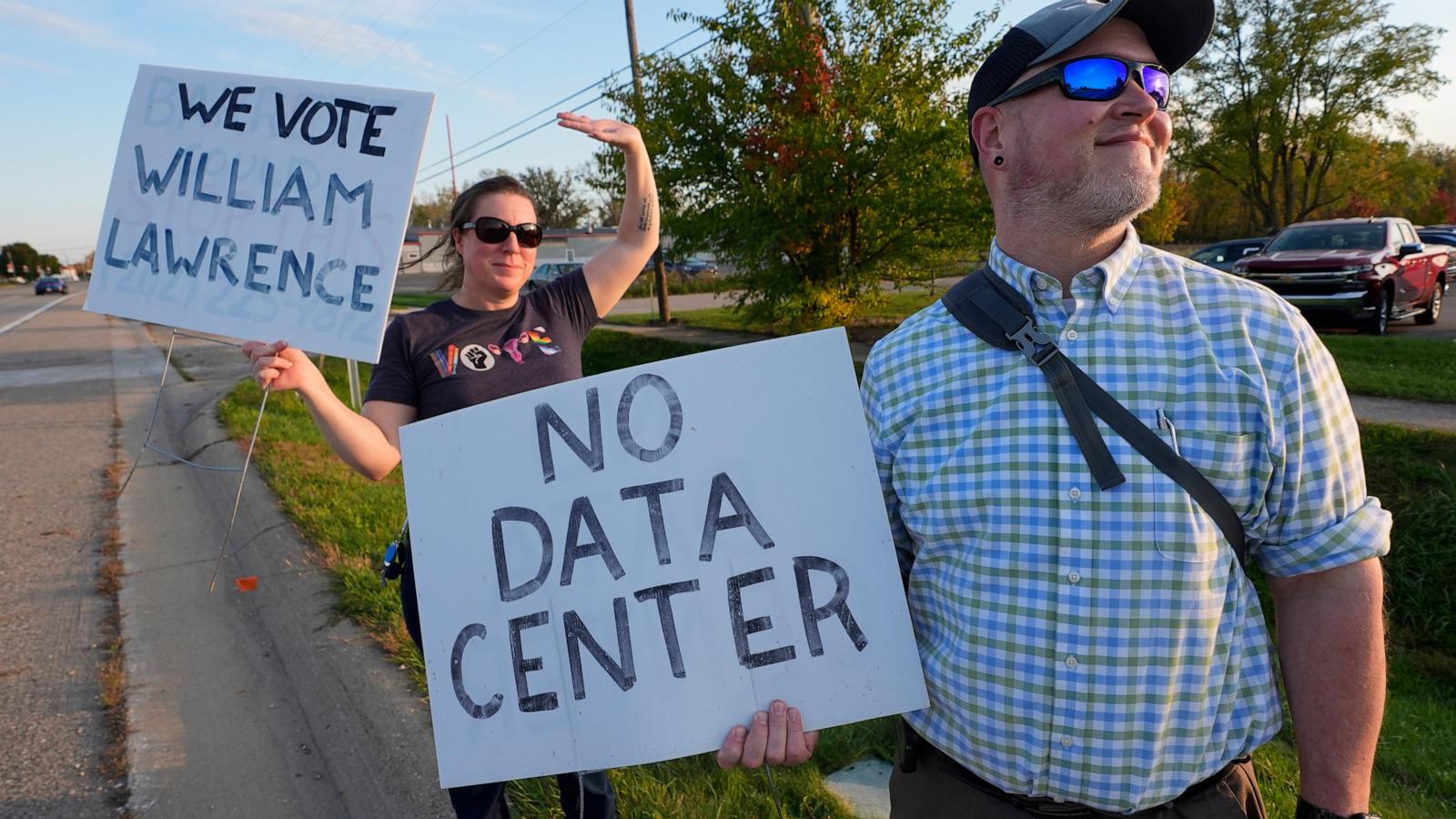
- Voters imposed limits on data center growth in the November 4, 2026 U.S. midterm elections, passing restrictive measures or outright moratoria in 44 of 45 tracked local referendums across key growth corridors.
- Candidates prioritized ratepayer protections on electricity prices and water conservation, enabling Democratic wins across congressional races and gubernatorial seats in hubs such as Texas, Ohio, Georgia, Nevada, and Iowa.
- Industry groups and AI developers adjusted post-election stances, with entities like the Data Center Coalition recognizing project delivery shifts and firms like OpenAI introducing community commitment frameworks as tech equities contracted on the Nasdaq.
The context you actually need
- Federal encouragement diverged from local sentiment, as rapid facility construction across regional hubs generated grassroots resistance focused on utility bills, water table depletion, and municipal infrastructure strain.
- Campaign spending reached record levels, with over $380 million directed into television advertising referencing data centers, where opposition messaging outspent industry-aligned perspectives by more than 3 to 1.
- State leadership shifted in primary infrastructure corridors, placing governors-elect such as Gina Hinojosa in Texas, Amy Acton in Ohio, and David Crowley in Wisconsin in position to enact legislative oversight on grid access and utility cost allocation.
What's really happening
The electoral outcome reflects an economic conflict over who bears the systemic costs of high-density computing infrastructure. Over the past three years, accelerated deployment of generative AI models required rapid physical development: high-voltage grid interconnects, high-capacity cooling facilities, and land zoned for light industrial scale. Because energy grids and municipal water supplies operate within finite short-term limits, dense clusters of hyperscale facilities began competing directly with residential and commercial ratepayers for baseload power and water allocations.
This competition altered voter incentives. In markets like Texas, which was positioned to become the largest global data center hub, residential ratepayers observed baseline costs shifting to subsidize necessary high-voltage grid upgrades. Drought-affected agricultural and suburban communities similarly faced falling local aquifers attributed to continuous cooling system demand.
As a result, candidates across both parties, particularly Democrats in state-level contests, built campaigns around economic insulation for households. By reframing data center facilities from broad economic drivers into localized cost centers that generate minimal ongoing employment relative to their resource consumption, anti-expansion platforms gained traction. Democratic campaigns captured five governorships in prime infrastructure hubs and established full state government control across five additional states.
The policy outcome is a shift from open development to strict regulatory conditionality. Winning platforms focused on three mechanisms: mandatory resource disclosures, municipal consent requirements, and rate ring-fencing. Under ring-fencing proposals, developers must directly fund dedicated generation, battery storage, and transmission capacity rather than drawing from the common pool at subsidized industrial rates.
For technology operators, the consequences are structural. Capital that had been budgeted strictly for hardware procurement and basic shell construction must now absorb local concession costs, community impact fees, and on-site generation infrastructure. Morgan Stanley analysts noted that these hurdles will create a bifurcated national landscape: states with rigorous review frameworks will experience extended permitting cycles and potential project cancellations, whereas regions with surplus generation capacity or higher risk tolerances will attempt to capture redirected capital. The era of frictionless grid interconnection for hyperscale computing has closed.
Who feels it first (and how)
- Hyperscale cloud operators and AI firms, who face delayed deployment schedules, costlier utility connection contracts, and the need to design localized community benefit agreements.
- Commercial and industrial real estate developers, who must navigate new local zoning referendums, increased permitting timelines, and moratorium risks across secondary and tertiary U.S. markets.
- Public utility commissions and grid operators, who are required to restructure tariff models to insulate residential ratepayers from system-wide generation and transmission upgrades.
- Enterprise IT buyers, who will see capital expenditure pressures passed down into higher per-token compute pricing and extended service delivery roadmaps.
What to watch next
- State-level legislative sessions in early 2027, where incoming administrations in Texas, Ohio, and Wisconsin are scheduled to introduce utility disclosure and grid-insulation legislation.
- Capital reallocation filings from major cloud providers, which will demonstrate whether hyperscalers slow buildouts or redirect capacity investments to non-hub states and international territories.
- Adoption metrics for OpenAI's community framework, which will serve as an industry test case for whether voluntary concessions can prevent municipal zoning vetoes.
Democratic candidates gained control of Congress, won governorships in key data center hubs (including Texas, Ohio, and Wisconsin), and secured local ballot restrictions in 44 of 45 monitored referendums amid $380 million in television ad spending.
Permitting timelines for high-density compute facilities in affected states will lengthen significantly, prompting tech firms to restructure power purchase agreements and incorporate dedicated on-site power generation.
Whether regulatory delays in core U.S. markets will materially shift global AI capital expenditures toward alternative hubs, or if the broader pullback in tech equities represents a temporary valuation reset rather than a persistent structural re-pricing.
Frequently Asked Questions
- Why it matters?
- The physical constraints of the digital economy—specifically grid load and water access—have transformed digital infrastructure into a localized electoral liability, establishing state-level limits on enterprise compute expansion.
- What happened (in 30 seconds)?
- Voters imposed limits on data center growth in the November 4, 2026 U.S. midterm elections, passing restrictive measures or outright moratoria in 44 of 45 tracked local referendums across key growth corridors. Candidates prioritized ratepayer protections on electricity prices and water conservation, enabling Democratic wins across congressional races and gubernatorial seats in hubs such as Texas, Ohio, Georgia, Nevada, and Iowa. Industry groups and AI developers adjusted post-election stances, w
- What's really happening?
- The electoral outcome reflects an economic conflict over who bears the systemic costs of high-density computing infrastructure. Over the past three years, accelerated deployment of generative AI models required rapid physical development: high-voltage grid interconnects, high-capacity cooling facilities, and land zoned for light industrial scale. Because energy grids and municipal water supplies operate within finite short-term limits, dense clusters of hyperscale facilities began competing dire
- Who feels it first (and how)?
- Hyperscale cloud operators and AI firms, who face delayed deployment schedules, costlier utility connection contracts, and the need to design localized community benefit agreements. Commercial and industrial real estate developers, who must navigate new local zoning referendums, increased permitting timelines, and moratorium risks across secondary and tertiary U.S. markets. Public utility commissions and grid operators, who are required to restructure tariff models to insulate residential ratepa
- What to watch next?
- State-level legislative sessions in early 2027, where incoming administrations in Texas, Ohio, and Wisconsin are scheduled to introduce utility disclosure and grid-insulation legislation. Capital reallocation filings from major cloud providers, which will demonstrate whether hyperscalers slow buildouts or redirect capacity investments to non-hub states and international territories. Adoption metrics for OpenAI's community framework, which will serve as an industry test case for whether voluntary
Research, news, and analysis on blockchain startups, DeFi, and regulations.
"Crypto Briefing provides research, news, and analysis on blockchain startups, DeFi, and crypto regulations with investor-focused coverage."
— A47 Editor
Democrats eye data center limits, AI legislation after electoral win
Democrats are reported to be considering stricter limits on data centers and new artificial intelligence legislation following their electoral win in the 2026 U.S. midterm elections, according to Crypto Briefing. The base report frames the expected s...
AI news with an enterprise and cloud focus.
"Covers AI in the context of data infrastructure, cloud, and enterprise stacks."
— A47 Editor
Midterm elections will put AI and data centers on trial, but will Big Tech end up winning anyway?
Following the US midterm elections, SiliconANGLE reports that early market reaction favored Big Tech, with many tech stocks rising, while chipmakers, neoclouds and data center operators were seen as more exposed to the political outcome, though the f...
Technology innovations, startups, and trends.
"ABC News delivers broad national coverage with a mainstream editorial stance, focusing on accessibility and balanced reporting."
— A47 Editor
Data centers took a beating in the midterm elections
The recent midterm elections in the U.S. saw significant opposition to data centers, with campaigns spending hundreds of millions on TV ads highlighting concerns over their environmental and economic impacts. Many elected officials have pledged to im...
24/7 international news from a French perspective in multiple languages.
"France 24 is viewed as a globally focused outlet with balanced coverage and a European perspective."
— A47 Editor
Tech stocks plunge as US midterm results fuel fears of tighter AI rules
Asian technology stocks fell sharply on Friday, with Seoul and Tokyo leading losses after a Wall Street sell-off driven by fears of tighter artificial intelligence regulation following Democrats' victory in the US midterm elections. Investors reacted...
Global business headlines with AI angles.
"General business outlet that frequently covers AI."
— A47 Editor
Midterms Could Deepen the K-Shaped AI Trade as Data Center Curbs Favor Big Tech Companies
Midterm election results favoring Democrats are shaping expectations for the AI trade, as data center restrictions gain traction, according to International Business Times. The base report frames the developments as a K-shaped dynamic in which financ...
Technology business and AI-related headlines.
"Data-driven tech newsroom with global scope."
— A47 Editor
AI Investment Bust Seen Less Likely With Data-Center Backlash
Investors are weighing whether the political backlash against data centers evident in the US midterm elections will slow the AI investment boom, a key driver of economic growth. Bloomberg Technology reports that the outcome raises new risks for the s...
Technology business news, market impacts, and innovation trends.
"Bloomberg is a premier financial and tech news provider, respected for its in-depth reporting and analytical rigor."
— A47 Editor
AI Investment Bust Seen Less Likely With Data-Center Backlash
Investors are weighing whether the political backlash against data centers evident in the US midterm elections will slow the AI investment boom, a key driver of economic growth. Bloomberg Technology reports that the outcome raises new risks for the s...
Business and tech news excluding paywalled content.
"High-volume business/tech outlet with frequent AI coverage."
— A47 Editor
Midterm AI data center backlash could help Amazon, Microsoft, Google
The base Business Insider report says the growing backlash against AI data centers ahead of the 2026 midterms could strengthen Amazon, Microsoft and Google by limiting competition and pushing up cloud computing prices. The story is categorized under ...