
Democratic Congressional Control After 2026 Midterms Triggers Oversight of Trump Foreign Policy and Iran War
Why it matters
A divided American government creates systemic friction around executive tariff authorities, foreign assistance, and military deployments, introducing market volatility across global energy and trade corridors.
What happened (in 30 seconds)
- A shift in congressional control: The November 4–5, 2026 US midterm elections transferred majorities in Congress to Democrats, establishing a direct legislative counterweight to President Donald Trump's external policies.
- Electoral attribution to foreign exposure: Vice President JD Vance explicitly connected the losses to public dissatisfaction with the ongoing conflict in Iran, broad-based import tariffs, and persistent domestic affordability challenges.
- Immediate legislative pushback: Congressional leadership initiated statutory oversight and funding limits targeting military engagements, proposed curbs on unilateral tariffs, and signaled scrutiny of executive leadership, including potential impeachment proceedings against Defense Secretary Pete Hegseth.
The context you actually need
- Escalation across global trade and alliances: Since 2025, the administration implemented broad tariff increases on both strategic competitors and historical allies, paired with sharp retractions in support for NATO, Ukraine, and multilateral aid structures.
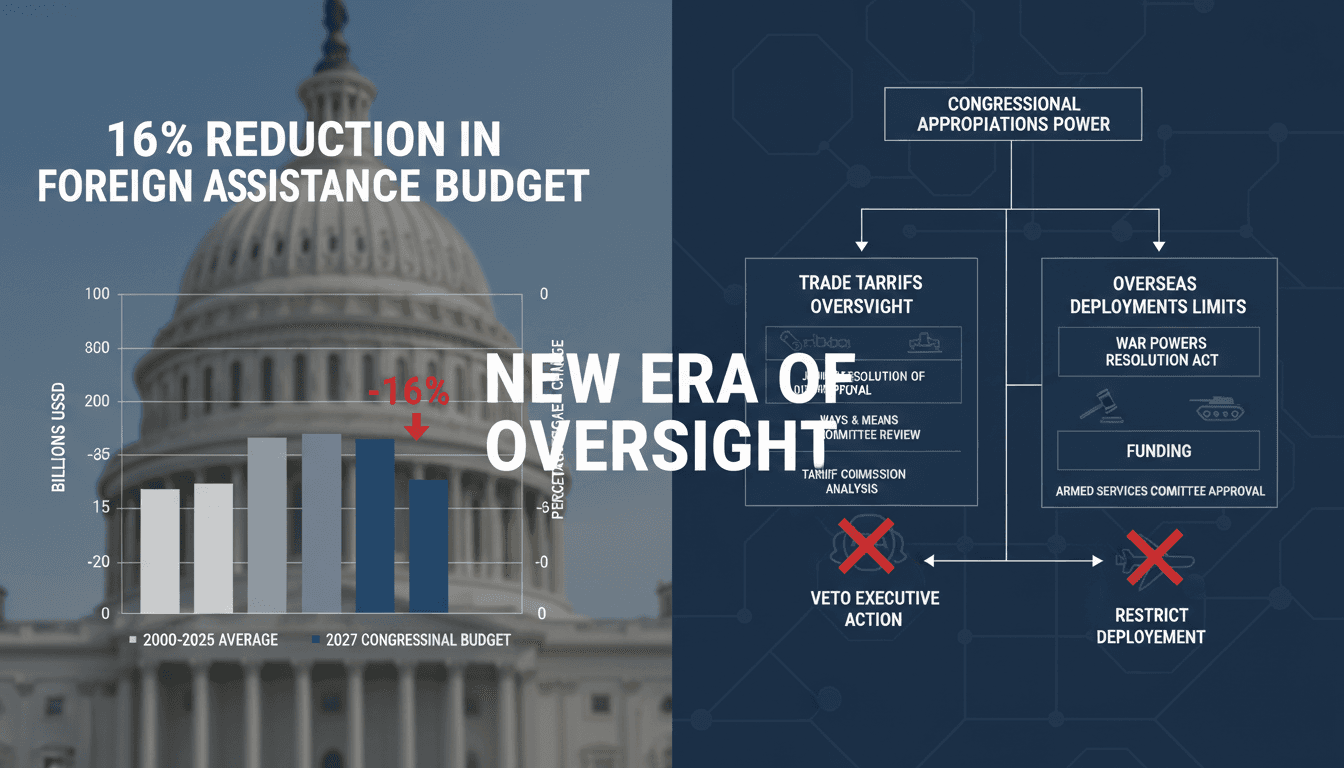
- The 16 percent baseline reduction: Congressional analysis documented a 16 percent cut to foreign aid budgets alongside the structural elimination of USAID, establishing clear spending reductions that the new legislative majority seeks to re-evaluate.
- Public fatigue and regional exposure: Polling from the Chicago Council on Global Affairs documented low public backing for sustained foreign entanglements, a sentiment exacerbated by ongoing hostilities with Iran and supply-chain pressures.
What's really happening
The post-midterm realignment represents a structural collision between executive discretion in foreign affairs and constitutional appropriations power. For global businesses, the critical mechanism to observe is not political rhetoric, but how statutory purse strings can constrain unilateral executive authority.
The executive branch holds substantial operational control over trade policy under delegated emergency powers and acts as commander-in-chief of active military personnel. However, the legislative branch retains absolute control over funding allocations. The incoming congressional majority is positioning appropriations as an explicit check on executive initiatives, specifically targeting operations in Iran, trade measures, and baseline diplomatic resources.
Vice President JD Vance’s public identification of the Iran conflict and tariffs as key drivers of electoral losses alters the internal political calculations within the administration. When domestic electoral losses are attributed to foreign military engagements and broad consumer price pressures from import duties, the political cost of sustaining unilateral interventions rises significantly.
Yet, institutional realities limit how rapidly legislative changes translate into altered operational outcomes. While Congress can restrict discretionary appropriations, defund specific military lines, or pass statutory requirements curtailing tariff flexibility, passing legislation requires veto-proof majorities or complex negotiations within mandatory budget windows. Concurrently, executive-led actions—such as dynamic tariff reviews or kinetic actions already authorized—operate on much faster cycles than deliberate committee investigations or statutory revisions.
Furthermore, international credibility is asymmetric: authority can be altered overnight by an executive order, but rebuilding multilateral trust, stabilizing strategic alliances, and restoring overseas development capacity require multi-year fiscal and diplomatic commitments. While areas like commercial pressure on China may maintain cross-aisle alignment, core disputes over NATO contributions, European security support, and regional security in the Middle East face prolonged institutional gridlock.
For international operators, this dynamic means navigating a more fragmented regulatory environment. Tariff schedules risk becoming subject to active litigation and legislative challenges, defense budget line items face targeted clawbacks, and foreign policy will fluctuate between executive decrees and congressional funding restraints.
Who feels it first (and how)
- Energy and maritime logistics operators: Companies operating through regional transit chokepoints like the Strait of Hormuz face fluctuating insurance premiums and operational risks tied directly to congressional debates over funding the Iran conflict.
- Cross-border supply chain directors: Importers and industrial manufacturers dependent on stable tariff structures face heightened legal and pricing volatility as lawmakers attempt to rein in unilateral executive trade authorities.
- Regional commercial hubs (notably Dubai): International business hubs in the Gulf must manage regional energy price swings, maritime trade exposures, and shifting global capital flows tied to US trade policy adjustments.
- Multilateral development and defense contractors: Entities aligned with foreign assistance, global health initiatives, and overseas equipment procurement face operational uncertainty following the 16 percent aid cut and ongoing reviews of defense leadership.
What to watch next
- Appropriations votes on Middle East military funding: Track specific floor votes regarding war funding caps and operational authorizations, which serve as the primary legal mechanism to enforce limits on military engagements in Iran.
- Legislative challenges to tariff delegation: Monitor proposed statutory amendments seeking to reclaim congressional authority over national-security-based trade tariffs, which directly affect corporate import costs.
- Executive oversight and leadership hearings: Watch committee proceedings regarding Defense Secretary Pete Hegseth for clear signals on how aggressively the new legislative majority will scrutinize executive defense strategies.
Democrats secured legislative control of Congress in the November 2026 midterms, setting up institutional confrontations over executive foreign policy, foreign assistance allocations, and military spending.
Targeted attempts to curtail unilateral tariffs and restrict military funding for operations in Iran will introduce sustained legislative-executive friction into baseline budget negotiations.
Whether Congress can assemble the structural margins necessary to overcome executive vetoes on key trade, defense, and foreign assistance policies remains unresolved.
Frequently Asked Questions
- Why it matters?
- A divided American government creates systemic friction around executive tariff authorities, foreign assistance, and military deployments, introducing market volatility across global energy and trade corridors.
- What happened (in 30 seconds)?
- A shift in congressional control: The November 4–5, 2026 US midterm elections transferred majorities in Congress to Democrats, establishing a direct legislative counterweight to President Donald Trump's external policies. Electoral attribution to foreign exposure: Vice President JD Vance explicitly connected the losses to public dissatisfaction with the ongoing conflict in Iran, broad-based import tariffs, and persistent domestic affordability challenges. Immediate legislative pushback: Congress
- What's really happening?
- The post-midterm realignment represents a structural collision between executive discretion in foreign affairs and constitutional appropriations power. For global businesses, the critical mechanism to observe is not political rhetoric, but how statutory purse strings can constrain unilateral executive authority. The executive branch holds substantial operational control over trade policy under delegated emergency powers and acts as commander-in-chief of active military personnel. However, the l
- Who feels it first (and how)?
- Energy and maritime logistics operators: Companies operating through regional transit chokepoints like the Strait of Hormuz face fluctuating insurance premiums and operational risks tied directly to congressional debates over funding the Iran conflict. Cross-border supply chain directors: Importers and industrial manufacturers dependent on stable tariff structures face heightened legal and pricing volatility as lawmakers attempt to rein in unilateral executive trade authorities. Regional commerc
- What to watch next?
- Appropriations votes on Middle East military funding: Track specific floor votes regarding war funding caps and operational authorizations, which serve as the primary legal mechanism to enforce limits on military engagements in Iran. Legislative challenges to tariff delegation: Monitor proposed statutory amendments seeking to reclaim congressional authority over national-security-based trade tariffs, which directly affect corporate import costs. Executive oversight and leadership hearings: Watch
Capitol Hill news, legislation, and policy insight.
"The Hill specializes in U.S. politics and policy, with a focus on Capitol Hill developments and a reputation for insider reporting."
— A47 Editor
Rebuilding US foreign policy after Trump
The incoming Congress, following a stinging Republican defeat in the midterm elections driven largely by opposition to the Iran war and tariff policies, is expected to attempt to restrain or reverse several of President Trump's foreign policy initiat...
Global business headlines with AI angles.
"General business outlet that frequently covers AI."
— A47 Editor
Trump Refuses to 'Clean House' Even as Republicans Urge Him to Reset After Midterm Loss
Republican allies and strategists are urging President Donald Trump to reset his approach after the party's midterm losses, pointing to the Iran war, tariffs and his policy priorities as liabilities, while Trump has declined to "clean house" in respo...
Global news coverage with extensive reporting on Middle Eastern conflicts and geopolitics.
"Al Jazeera is a Qatar-based broadcaster known for wide regional coverage and alternative perspectives."
— A47 Editor
Congress defeat: How Trump’s allies are distancing themselves from Iran war
The base report from Al Jazeera says Trump's allies are increasingly distancing themselves from the US-Israeli war on Iran after Republicans suffered a sweeping defeat in the November 3 midterm elections, in which Democrats won control of both the Ho...
Comprehensive coverage of Middle Eastern and global issues.
"Al Jazeera is a prominent voice from the Global South, especially the Middle East, with an emphasis on underreported stories."
— A47 Editor
Congress defeat: How Trump’s allies are distancing themselves from Iran war
The base report from Al Jazeera says Trump's allies are increasingly distancing themselves from the US-Israeli war on Iran after Republicans suffered a sweeping defeat in the November 3 midterm elections, in which Democrats won control of both the Ho...
News from the United States including domestic politics, society, and culture.
"The Guardian is known for its progressive editorial stance and in-depth analysis, often advocating for social justice, environmental issues, and liberal values."
— A47 Editor
A Democratic-controlled Congress will likely try to constrain Trump’s foreign adventures
A Democratic-controlled Congress is expected to try to constrain President Donald Trump's foreign policy after Democrats won control of the Senate and were projected to take the House in the November 3 midterm elections. Trump retains veto power, whi...
International coverage from The Guardian's global desks.
"The Guardian is known for its progressive editorial stance and in-depth analysis."
— A47 Editor
A Democratic-controlled Congress will likely try to constrain Trump’s foreign adventures
A Democratic-controlled Congress is expected to try to constrain President Donald Trump's foreign policy after Democrats won control of the Senate and were projected to take the House in the November 3 midterm elections. Trump retains veto power, whi...