
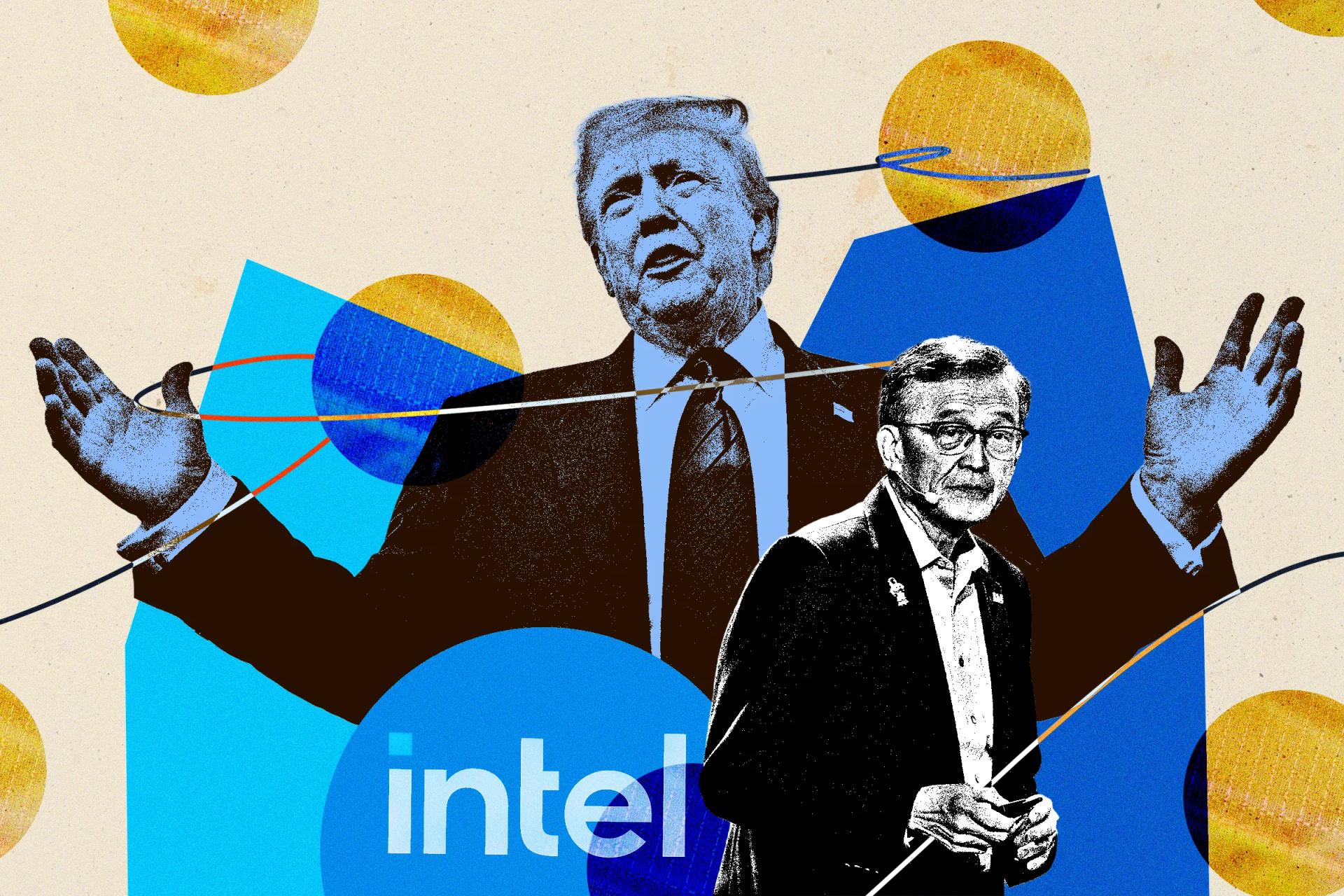
US Government Takes Unpaid 10 Percent Equity Stake in Intel Under Coercive Pressure Tied to CHIPS Act Grant Release
Why it matters
The transaction establishes a precedent where sovereign approval and statutory industrial grants can be conditioned on dilutive, direct equity concessions to the state.
What happened (in 30 seconds)
- Equity transfer without payment: On August 25, 2025, the United States government secured a 10 percent equity stake in Intel Corporation, valued at approximately $11 billion, without providing direct cash consideration.
- Grant conditionality: The equity issuance was required to unfreeze $8.9 billion in previously approved CHIPS and Science Act funding that the administration had placed on hold pending renegotiation.
- Executive pressure: The agreement followed scrutiny over Intel CEO Lip-Bu Tan's historical investments in Chinese technology entities, an August 7 demand for his resignation, and an August 18 directive stating the terms were non-negotiable.
The context you actually need
- The statutory baseline: Intel had initially qualified for up to $11 billion in federal grants under the CHIPS and Science Act during the Biden administration to expand domestic manufacturing capacity.
- Leadership friction: Following financial headwinds, Intel appointed Lip-Bu Tan as CEO in March 2025, drawing scrutiny from federal officials over prior venture investments in Chinese technology companies.
- Wider sector actions: The maneuver occurred alongside parallel administration interventions in the semiconductor industry, including leadership discussions with Nvidia, which later executed a $5 billion investment in Intel.
What's really happening
The direct equity acquisition of a 10 percent stake in Intel reframes the relationship between sovereign states and strategic corporate entities. Rather than treating legislative industrial subsidies as fixed legal commitments, executive authorities leveraged discretionary disbursement power to extract balance sheet ownership.
The institutional mechanism relied on a classic asymmetric bargaining posture. Intel entered the second half of 2025 carrying substantial financial burdens, high capital expenditure commitments for fabrication facilities, and a recent leadership transition under CEO Lip-Bu Tan. When the administration placed the remaining CHIPS Act funds on hold—criticizing the program's initial structure as inefficient—Intel faced an acute capital constraint. The administration paired this financial choke point with regulatory and personal leverage, publicly scrutinizing Tan’s historical venture capital footprint in Chinese technology firms and initially demanding his resignation on August 7, 2025.
By the time Tan, Commerce Secretary Howard Lutnick, and Treasury Secretary Scott Bessent met in the Oval Office on August 11, the negotiation parameters had shifted from grant disbursement compliance to structural state participation. Commerce Department lawyer David Shapiro relayed to Intel’s chief financial officer on August 18 that the 10 percent transfer was non-negotiable, advising that board resistance carried unpredictable fallout. Internal records indicate the board viewed the terms as commercially unattractive; nevertheless, the prospect of losing $8.9 billion in capital subsidies while facing regulatory headwinds compelled approval.
This approach alters corporate risk profiles across critical manufacturing sectors. Traditional industrial policy distributes capital via grants, loans, or tax credits in exchange for operational targets such as domestic production volume and employment quotas. Conditioning previously authorized disbursements on zero-cost equity introduces direct dilution risk for private shareholders while creating a precedent of state-mandated ownership in foundational supply chain operators.
For international technology markets, this transaction establishes that foreign commercial ties can rapidly escalate into existential regulatory pressure. For domestic equity markets, it underscores that government funding in strategic hardware sectors may no longer be non-dilutive. The subsequent market movement—characterized by an initial stock appreciation following grant clarity and Nvidia’s subsequent $5 billion investment—indicates that capital markets are currently balancing dilution penalties against the practical value of explicit sovereign alignment.
Who feels it first (and how)
- Institutional technology investors: Asset managers holding semiconductor equities face sudden dilution risks and altered valuation models where state participation can override board autonomy.
- C-suite executives with cross-border exposure: Leaders at critical technology firms with prior commercial or investment footprints in China face targeted scrutiny that can be leveraged into structural corporate concessions.
- Semiconductor supply chain planners: Chip design firms and hardware integrators reliant on domestic fabrication capacity must account for direct government stakes influencing vendor stability and operational direction.
- Corporate governance officers: General counsels and board directors in subsidized industries must recalibrate their fiduciary obligations when state grant compliance demands unilateral equity transfers.
What to watch next
- Resolution of shareholder litigation: The court outcome of the lawsuit filed by shareholder Richard Paisner against Intel’s board will clarify whether directors face liability when yielding to executive demands under commercial pressure.
- Disbursement timelines for remaining semiconductor awards: Monitoring whether parallel equity requirements are imposed on other CHIPS Act grant recipients will indicate whether this is standard policy or an Intel-specific intervention.
- US government voting behavior: Watch whether the Commerce Department exercises voting power or seeks board seats at Intel, which will demonstrate how actively the state intends to direct operational corporate strategy.
The United States holds a 10 percent stake in Intel, valued at $11 billion at the time of the transfer, acquired at zero purchase price in exchange for unlocking $8.9 billion in CHIPS Act grants.
Corporate boards operating in federally subsidized critical technologies will formalize new defense playbooks to assess the dilution risk of accepting government capital.
Whether the federal government intends to hold the Intel equity long-term as a sovereign asset or liquidate the shares as domestic fabrication milestones are met.
Frequently Asked Questions
- Why it matters?
- The transaction establishes a precedent where sovereign approval and statutory industrial grants can be conditioned on dilutive, direct equity concessions to the state.
- What happened (in 30 seconds)?
- Equity transfer without payment: On August 25, 2025, the United States government secured a 10 percent equity stake in Intel Corporation, valued at approximately $11 billion, without providing direct cash consideration. Grant conditionality: The equity issuance was required to unfreeze $8.9 billion in previously approved CHIPS and Science Act funding that the administration had placed on hold pending renegotiation. Executive pressure: The agreement followed scrutiny over Intel CEO Lip-Bu Tan's h
- What's really happening?
- The direct equity acquisition of a 10 percent stake in Intel reframes the relationship between sovereign states and strategic corporate entities. Rather than treating legislative industrial subsidies as fixed legal commitments, executive authorities leveraged discretionary disbursement power to extract balance sheet ownership. The institutional mechanism relied on a classic asymmetric bargaining posture. Intel entered the second half of 2025 carrying substantial financial burdens, high capital
- Who feels it first (and how)?
- Institutional technology investors: Asset managers holding semiconductor equities face sudden dilution risks and altered valuation models where state participation can override board autonomy. C-suite executives with cross-border exposure: Leaders at critical technology firms with prior commercial or investment footprints in China face targeted scrutiny that can be leveraged into structural corporate concessions. Semiconductor supply chain planners: Chip design firms and hardware integrators rel
- What to watch next?
- Resolution of shareholder litigation: The court outcome of the lawsuit filed by shareholder Richard Paisner against Intel’s board will clarify whether directors face liability when yielding to executive demands under commercial pressure. Disbursement timelines for remaining semiconductor awards: Monitoring whether parallel equity requirements are imposed on other CHIPS Act grant recipients will indicate whether this is standard policy or an Intel-specific intervention. US government voting behav
In-depth reporting on tech, policy, and science including AI.
"Respected analysis for technically savvy readers, including AI topics."
— A47 Editor
Intel faced a choice: Give Trump 10% or face the consequences
The Ars Technica report says Intel faced pressure from the Trump administration to surrender a 10% stake in the company in exchange for unlocking billions of dollars in promised government grants, with the stake demand presented as a condition for th...
In-depth coverage of hardware, software, science, and policy.
"Ars Technica provides expert technology news, hardware reviews, and analysis for a technically savvy audience."
— A47 Editor
Intel faced a choice: Give Trump 10% or face the consequences
The Ars Technica report says Intel faced pressure from the Trump administration to surrender a 10% stake in the company in exchange for unlocking billions of dollars in promised government grants, with the stake demand presented as a condition for th...
Curated tech headlines including AI stories.
"Influential aggregator surfacing the day’s top tech/AI links."
— A47 Editor
US court documents detail a Commerce Department pressure campaign on Intel to acquire a 10% equity stake in 2025, warning rejection would carry "consequences" (Noah Shachtman/Wired)
US court documents, as detailed by Wired reporter Noah Shachtman, describe a Commerce Department pressure campaign in 2025 urging Intel to acquire a 10% equity stake in the company, with officials warning that rejecting the proposal would carry "cons...
Business and policy angles on tech and AI.
"Business desk coverage intersecting with AI trends."
— A47 Editor
Not Just Nvidia: Inside Team Trump’s Takeover of Intel
WIRED reports that Donald Trump's dealings with Intel reveal another government-led pressure campaign involving a private company, according to court documents, placing the episode within a wider pattern of White House intervention in corporate affai...
Emerging technologies, digital transformation, IT, and cultural impact of tech.
"WIRED covers the intersection of technology, culture, and politics with a progressive, forward-looking editorial stance."
— A47 Editor
Not Just Nvidia: Inside Team Trump’s Takeover of Intel
WIRED reports that Donald Trump's dealings with Intel reveal another government-led pressure campaign involving a private company, according to court documents, placing the episode within a wider pattern of White House intervention in corporate affai...