
Iraq Moves to Assert Federal Control Over Borders and Oil Resources Amid Kurdistan Smuggling Crackdown
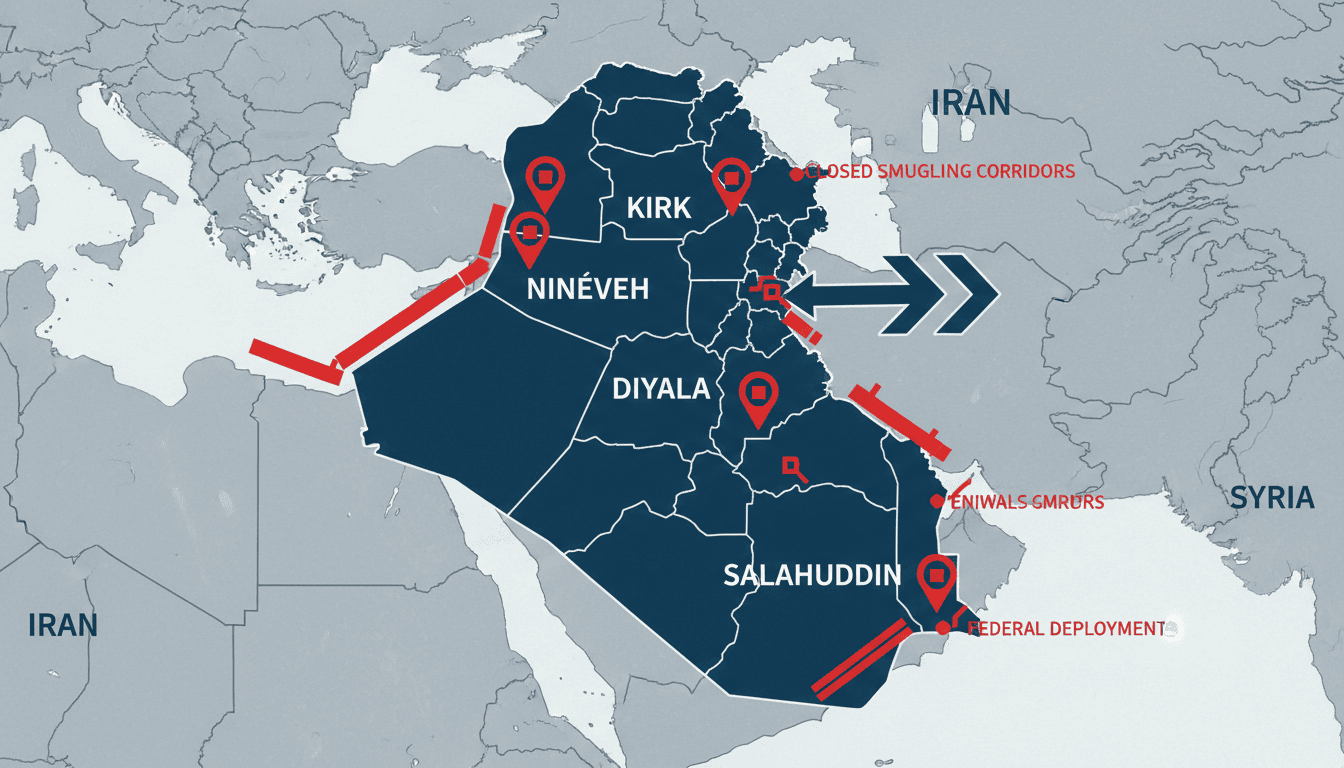
Shifts in Iraqi federal control over northern export conduits directly affect regional energy transit routes and trade compliance margins across the Middle East.
Why it matters
Consolidating sovereign authority over contested transit hubs reallocates oil revenue flows and alters the regulatory baseline for regional energy trade.
What happened (in 30 seconds)
- Federal border reassertion ordered: Prime Minister Ali Faleh Al-Zaidi directed federal authorities to take direct oversight of international border ports and unofficial crossings, particularly across northern regions.
- Resource management brought under central control: Directives assigned the federal Oil Ministry to manage specified oil fields across Diyala, Kirkuk, Salahuddin, and Nineveh, supported by a Federal Supreme Court ruling upholding the measures.
- Diplomatic and legal alignment sought: During a November 26, 2026, meeting with European Union ambassadors in Baghdad, Al-Zaidi confirmed plans to suppress cross-border smuggling networks, drawing international backing alongside calls from Kurdish authorities for institutional dialogue.
The context you actually need
- Northern transit friction has persisted for years: Cross-border illicit fuel movement, particularly along routes passing through the Kurdistan Region toward neighboring states such as Iran and Syria, has historically diverted central treasury receipts.
- Enforcement accelerated ahead of diplomatic talks: The November 24 directives removed specific regional security officials, initiated investigations at the North Oil Company, and mandated closures of unauthorized border crossings.
- Major international players have signaled support: While regional authorities raised questions regarding constitutional boundaries, the United States and European Union envoys affirmed their backing for central anti-smuggling and anti-corruption operations.
What's really happening
The operational core of Baghdad’s enforcement push is about institutional balance and resource accounting. When cross-border transit occurs outside a unified regulatory framework, economic returns bypass the national treasury. By deploying federal border units to northern crossings and transferring regional field administration in Diyala, Kirkuk, Salahuddin, and Nineveh directly to the federal Oil Ministry, the central executive is asserting single-window authority over energy output.
This dynamic alters the structural incentives governing public finance in Iraq. Centralizing export nodes enables the state to audit every barrel leaving national borders. The Federal Supreme Court’s legal affirmation provides the statutory justification to override regional administrative objections. For Baghdad, securing these corridors eliminates parallel economic networks that have historically funded localized security structures. For the Kurdistan Regional Government, the loss of administrative control over transit points creates fiscal friction, prompting official appeals to constitutional rights and demands for formal political mediation.
International incentives further reinforce this centralizing trajectory. Meetings between Al-Zaidi and European Union ambassadors, alongside diplomatic backing from Washington, demonstrate that major consuming economies prioritize formal tracking and regulatory transparency over fragmented local arrangements. Western partners view leakages toward neighboring markets, notably Iran and Syria, as a compliance risk that complicates regional trade monitoring. Supporting central federal oversight serves external interests by establishing a single counterparty for energy security and cross-border customs enforcement.
The friction is fundamentally operational. Closing unauthorized border passages and directing state enterprises like the North Oil Company to report exclusively to federal ministries alters physical supply chains on the ground. Trucking routes that previously operated under informal or decentralized local permissions face immediate closure or formal state inspection. These closures directly contract the illicit secondary market, compelling physical volumes either back into regulated federal pipelines or off the market entirely. Consequently, the commercial baseline shifts: federal revenues capture a higher proportion of output, while autonomous regional logistical operations lose their primary source of discretionary cash flow.
Who feels it first (and how)
- Energy logistics operators: Transport companies moving refined products or crude across northern corridors face heightened customs scrutiny, route closures along Syrian and Iranian frontiers, and mandatory federal documentation.
- Federal and regional revenue authorities: Baghdad’s central treasury captures increased customs receipts and energy proceeds, while regional fiscal budgets in the Kurdistan Region face immediate liquidity adjustments.
- Regional trade compliance officers: Corporate legal and compliance teams operating across Middle Eastern energy hubs must audit cross-border supply chains to ensure transport counterparties are certified under federal Iraqi institutions.
- Local border-adjacent economies: Secondary commercial networks reliant on informal crossing points experience rapid trade volume reductions as federal armed forces secure checkpoints.
What to watch next
- The December 1 national dialogue: Bilateral meetings between Baghdad and Kurdish leadership will determine whether administrative compromises are reached over joint border management or if federalization proceeds unilaterally.
- Federal Supreme Court follow-up rulings: Scheduled judicial hearings on pending constitutional challenges will define the legal boundaries of federal ministry interventions in regional oil fields.
- Northern export volume reporting: Central Oil Ministry export data will indicate whether recovered field production successfully routes into formal pipelines or encounters physical bottlenecks.
Prime Minister Al-Zaidi issued formal directives transferring northern border ports and specified energy fields in four provinces to federal control, backed by the Federal Supreme Court and endorsed by EU diplomats.
Formal export figures reported by Baghdad will increase as unregulated routes into neighboring countries are physically intercepted by federal security forces.
Whether upcoming bilateral political negotiations will produce an integrated customs revenue-sharing formula or trigger extended administrative friction between Erbil and Baghdad.
Frequently Asked Questions
- Why it matters?
- Consolidating sovereign authority over contested transit hubs reallocates oil revenue flows and alters the regulatory baseline for regional energy trade.
- What happened (in 30 seconds)?
- Federal border reassertion ordered: Prime Minister Ali Faleh Al-Zaidi directed federal authorities to take direct oversight of international border ports and unofficial crossings, particularly across northern regions. Resource management brought under central control: Directives assigned the federal Oil Ministry to manage specified oil fields across Diyala, Kirkuk, Salahuddin, and Nineveh, supported by a Federal Supreme Court ruling upholding the measures. Diplomatic and legal alignment sought:
- What's really happening?
- The operational core of Baghdad’s enforcement push is about institutional balance and resource accounting. When cross-border transit occurs outside a unified regulatory framework, economic returns bypass the national treasury. By deploying federal border units to northern crossings and transferring regional field administration in Diyala, Kirkuk, Salahuddin, and Nineveh directly to the federal Oil Ministry, the central executive is asserting single-window authority over energy output. This dyna
- Who feels it first (and how)?
- Energy logistics operators: Transport companies moving refined products or crude across northern corridors face heightened customs scrutiny, route closures along Syrian and Iranian frontiers, and mandatory federal documentation. Federal and regional revenue authorities: Baghdad’s central treasury captures increased customs receipts and energy proceeds, while regional fiscal budgets in the Kurdistan Region face immediate liquidity adjustments. Regional trade compliance officers: Corporate legal a
- What to watch next?
- The December 1 national dialogue: Bilateral meetings between Baghdad and Kurdish leadership will determine whether administrative compromises are reached over joint border management or if federalization proceeds unilaterally. Federal Supreme Court follow-up rulings: Scheduled judicial hearings on pending constitutional challenges will define the legal boundaries of federal ministry interventions in regional oil fields. Northern export volume reporting: Central Oil Ministry export data will indi
Arabic-language coverage of Saudi, regional, and international affairs.
"Al Bilad offers mainstream Saudi newspaper coverage across domestic and broader Arab topics."
— A47 Editor
الزيدي يتعهد بضبط الحدود ومنع تهريب النفط بالعراق
Iraqi Prime Minister Ali Falih al-Zaidi said his government will continue enforcing the rule of law, controlling international borders and managing the country's oil wealth, pledging strict measures to prevent oil smuggling nationwide. He stressed th...
Arabic-language coverage of international news and geopolitics.
"RT Arabic is a Russian state-funded outlet often criticized for promoting Kremlin-aligned narratives."
— A47 Editor
رئيس الوزراء العراقي: نعمل على بناء هوية اقتصادية جديدة للدولة
Iraqi Prime Minister Ali Falih al-Zaidi said on Thursday that the government is working to build a new economic identity for Iraq, based on consolidating security and political stability and creating an environment attractive to investment, according...
Arabic-language coverage of international news and geopolitics.
"RT Arabic is a Russian state-funded outlet often criticized for promoting Kremlin-aligned narratives."
— A47 Editor
الزيدي: الحكومة الاتحادية مسؤولة عن ضبط الحدود الدولية للعراق
Iraqi Prime Minister Ali Falih al-Zaidi affirmed that the federal government is committed to controlling Iraq's international borders and managing its oil wealth, in accordance with decisions of the Federal Supreme Court. The statement was reported b...