
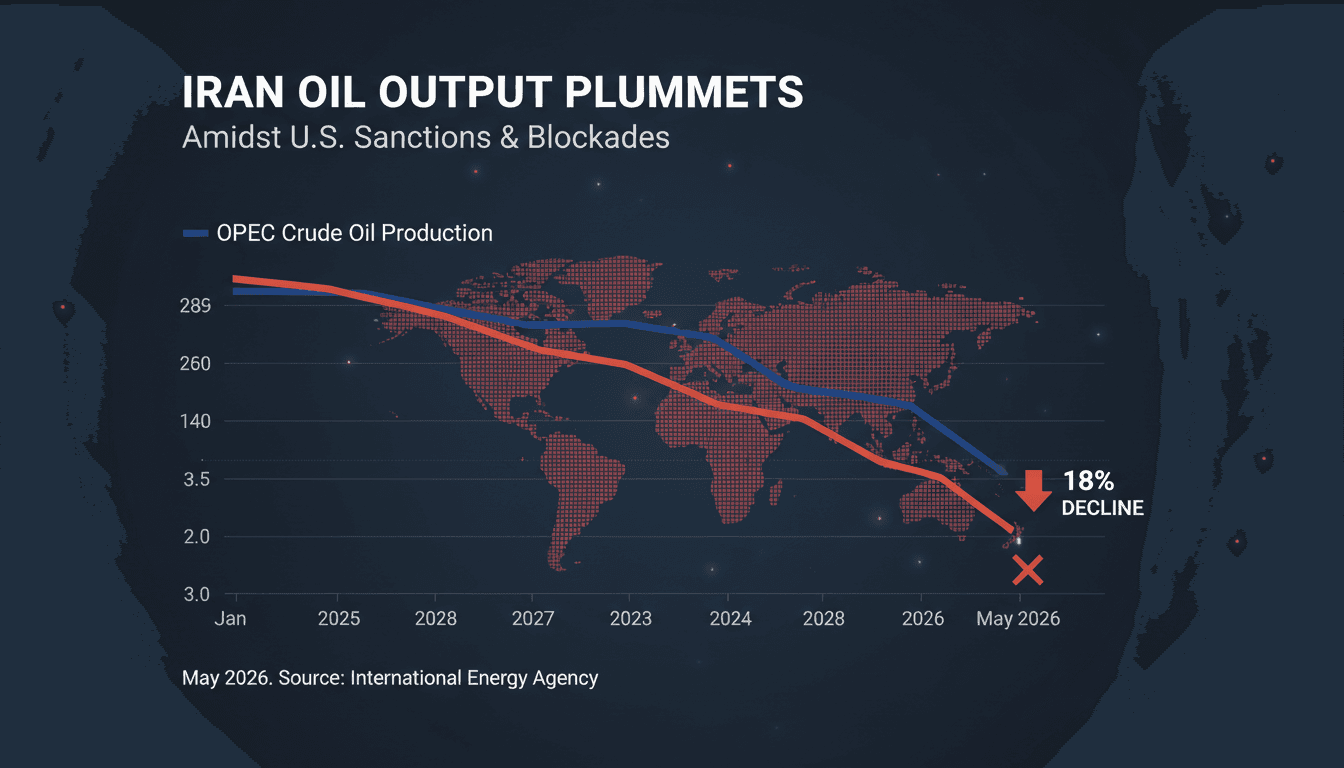
Iran's crude oil production declines over 18% amid U.S. sanctions
Here's what it means for you.
The significant decline in Iran's crude oil production, dropping over 18% in May 2026, underscores the severe impact of U.S. sanctions on the nation's economy. This situation not only threatens Iran's oil export capabilities but also raises concerns about global oil supply dynamics, particularly as OPEC faces its lowest output levels in over two decades. Stakeholders in the energy market should closely monitor how Iran adapts its strategies in response to these challenges. As the sanctions persist, the implications for oil prices and international relations could be profound. The ongoing blockade may compel Iran to seek alternative routes and methods for oil production and export, potentially reshaping the regional energy landscape.
What happened
Iran's crude oil production has experienced a notable decline, falling by more than 18% in May 2026. This drop is primarily attributed to the ongoing U.S. sanctions and blockades that severely restrict Iran's ability to export oil. The situation has raised alarms regarding Iran's capacity to store its crude oil, which could lead to further economic challenges.
The decline in production is significant, as it reflects the broader impact of geopolitical tensions on energy markets. The U.S. blockade has not only affected Iran's oil exports but has also complicated shipping routes, particularly through the crucial Strait of Hormuz.
The Context
The U.S. blockade on Iran has created a challenging environment for the country's oil industry, which is a vital component of its economy. As OPEC's overall oil output reaches its lowest level since at least 2000, the implications of Iran's production decline extend beyond its borders, affecting global oil supply dynamics. The closure of key shipping routes has further complicated the situation, making it increasingly difficult for Iran to navigate its export challenges.
This decline in production comes at a time when the global energy market is already under pressure, raising questions about how OPEC will respond to the declining outputs. The interplay between U.S. sanctions and OPEC's strategies will be crucial in determining future oil prices and availability.
Takeaway
Looking ahead, the ongoing blockade may force Iran to explore alternative strategies for its oil production and export. Potential negotiations or changes in U.S. sanctions policy could significantly alter the current landscape, impacting both Iran and global oil markets. Monitoring OPEC's response to these developments will be essential, as the organization grapples with the implications of reduced output.
As the situation evolves, stakeholders should remain vigilant about the potential shifts in energy policies and market dynamics that could arise from Iran's need to adapt to these challenges.
Regional and international reporting focused on Middle Eastern politics, diplomacy, and economics.
"Asharq Al-Awsat is a Saudi-owned international newspaper reflecting mainstream Gulf political perspectives."
— A47 Editor
Iran’s Oil Production Slumped Due to US Blockade, Closure of Hormuz
U.S. business news, corporate developments, and economy.
"The Wall Street Journal is respected for deep financial and economic reporting with a center-right editorial perspective."
— A47 Editor
Iran’s Crude Production Slumped in May Under U.S. Blockade
Iran's crude oil production fell by over 18% in May due to ongoing U.S. blockades that restrict shipments to and from its ports, raising concerns about potential storage shortages for the country's crude oil.
Oil, metals, and agriculture: supply/demand headlines, OPEC chatter, inventories, and price action.
"Solid tape for energy and metals traders tracking macro and micro catalysts."
— A47 Editor
OPEC oil output lowest since at least 2000 as US blockade squeezes Iran, Reuters survey shows
OPEC's oil output has reached its lowest level since at least 2000, primarily due to the ongoing US blockade on Iran, which has significantly impacted the country's oil exports. This situation reflects the broader geopolitical tensions affecting glob...