
China's crude oil imports hit near decade low amid Persian Gulf conflict
Here's what it means for you.
The significant drop in China's crude oil imports signals a critical shift in the global energy market, influenced by both geopolitical tensions and domestic economic conditions. As the Persian Gulf conflict continues, supply chain disruptions may further exacerbate the situation, impacting global oil prices and availability. For businesses and policymakers, understanding these dynamics is essential for navigating future energy strategies and economic planning.
What happened
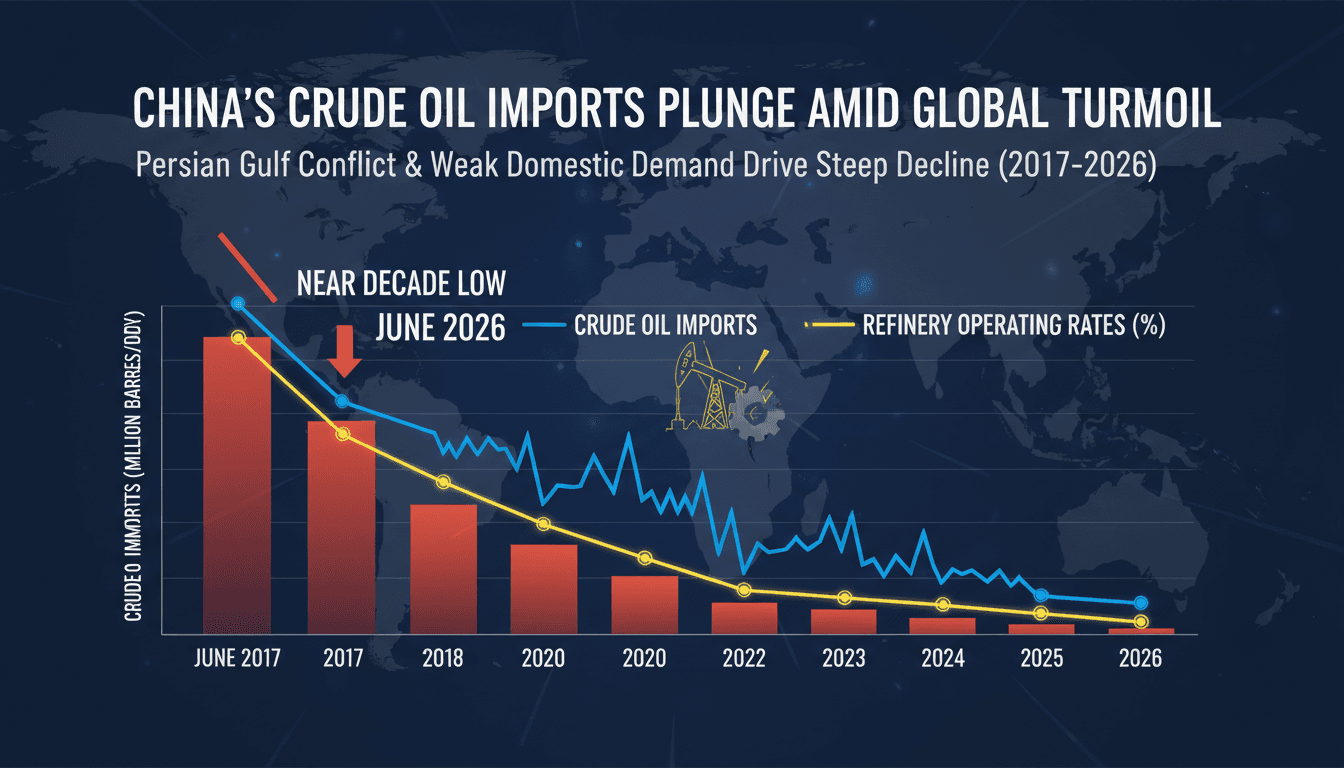
In June 2026, China's crude oil imports fell to their lowest levels in nearly a decade. This decline is primarily attributed to the ongoing war in the Persian Gulf, which has disrupted oil supply chains. Additionally, there has been a sharp reduction in domestic demand for oil, leading to historically low import levels.
Refinery operating rates in China have also dropped to their lowest in ten years, reflecting the broader impact of these factors on the country's oil industry. The combination of external geopolitical challenges and internal economic slowdowns has created a precarious situation for China's energy sector.
The Context
The war in the Persian Gulf has significantly affected oil supply chains, creating uncertainty in the global market. As a major consumer of crude oil, China's reduced imports highlight the interconnectedness of geopolitical events and domestic economic health. The abrupt slowdown in domestic demand for oil further complicates the landscape, as refinery operations struggle to maintain viability.
This situation is critical for stakeholders across the energy sector, including producers, consumers, and policymakers. The timing of these developments is particularly concerning, as they coincide with a period of heightened geopolitical tensions that could lead to further disruptions in oil supply.
Takeaway
Looking ahead, it is essential to monitor developments in the Persian Gulf conflict, as ongoing tensions may continue to impact oil supply and prices. Additionally, changes in China's domestic oil demand and refinery operations will be crucial indicators of the future landscape. The current situation remains fluid, with potential for further declines in imports if these challenges persist.
Stakeholders should remain vigilant and prepared for shifts in the market, as both international and domestic factors will play a significant role in shaping China's energy future.
Regional and international reporting focused on Middle Eastern politics, diplomacy, and economics.
"Asharq Al-Awsat is a Saudi-owned international newspaper reflecting mainstream Gulf political perspectives."
— A47 Editor
China’s June Oil Imports Hit Near 10-Year Low Amid Iran War
China's oil imports in June have reached their lowest levels in nearly a decade, significantly impacted by the ongoing conflict involving Iran. This decline reflects the broader disruptions in global oil supply chains, particularly as tensions escala...
Pan-Arab news coverage spanning politics, business, sports, and regional affairs.
"Asharq Al-Awsat reflects a broad Arab editorial perspective with strong attention to regional geopolitics."
— A47 Editor
واردات الصين النفطية تهبط لأدنى مستوى في نحو 10 سنوات مع تداعيات الحرب
China's crude oil imports fell to their lowest level in nearly a decade in June, coinciding with a significant drop in refinery operating rates, which are also at a ten-year low. This decline reflects the ongoing impacts of the war, affecting the cou...
Global markets, investing, and macroeconomics from a premier financial newsroom.
"Bloomberg is respected for in-depth financial reporting and data-driven analysis."
— A47 Editor
China’s Crude Imports Plunge to Lowest in Nearly a Decade
China's crude oil imports fell sharply in June to their lowest level in nearly a decade, primarily due to a significant slowdown in domestic demand and ongoing conflicts in the Persian Gulf. This decline highlights the challenges faced by the world's...