
US consumer sentiment hits record low amid rising inflation and gas prices
Here's what it means for you.
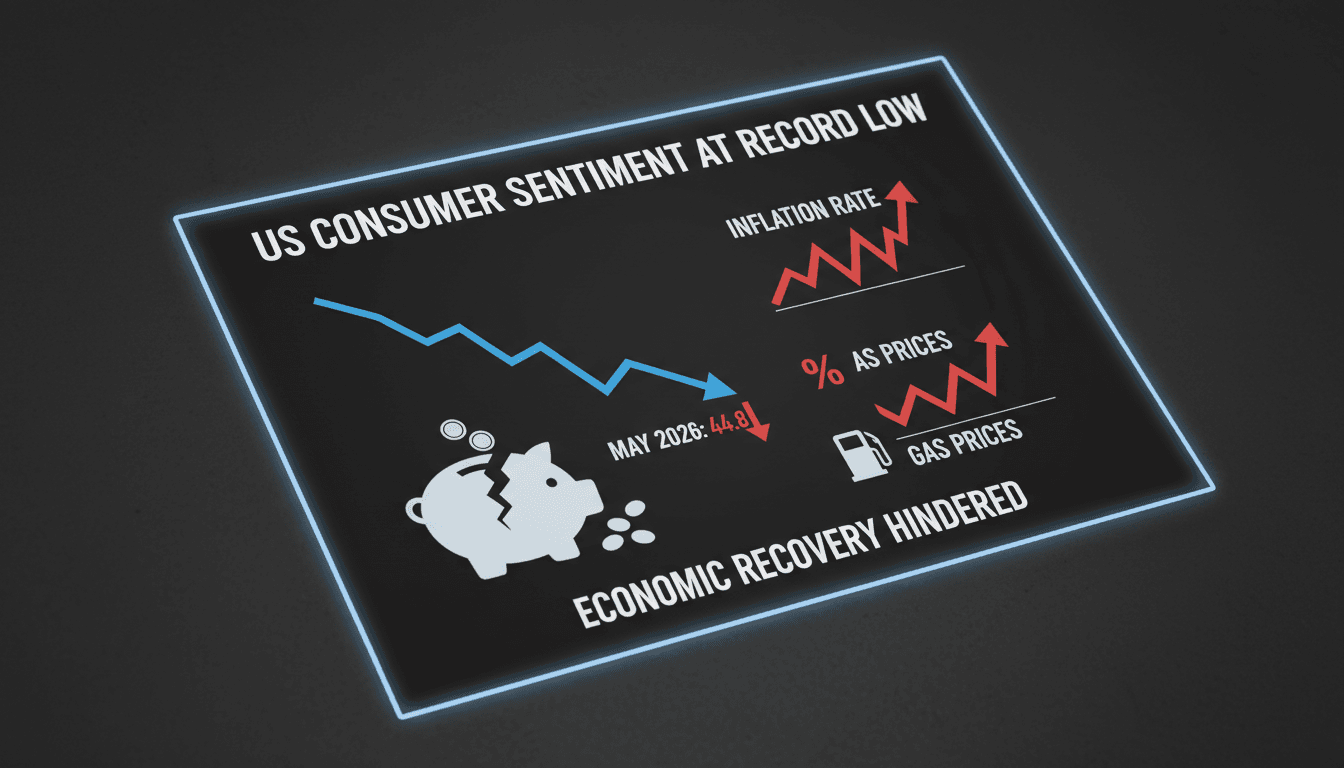
The recent drop in U.S. consumer sentiment to a historic low of 44.8 signals significant economic distress among households. This decline, driven by rising gasoline prices and persistent inflation, suggests that consumer confidence is waning, which could hinder economic recovery efforts. As households grapple with escalating living costs, businesses and policymakers may need to adapt strategies to address these challenges. The implications of this sentiment shift extend beyond individual households, potentially impacting market dynamics and government policy responses. A sustained decline in consumer confidence could lead to reduced spending, further exacerbating economic challenges.
What happened
U.S. consumer sentiment has fallen to a record low of 44.8 as of May 2026. This unprecedented decline is primarily attributed to rising gasoline prices and ongoing inflation concerns that are straining household budgets. The University of Michigan's survey highlights the growing dissatisfaction among American households as they face escalating living costs.
This drop in consumer sentiment marks the lowest reading ever recorded in the survey's history, underscoring the severity of the current economic climate. As consumers feel the pressure of rising costs, their confidence in the economy continues to erode.
The Context
The current economic landscape is characterized by increasing anxiety about inflation, particularly due to higher gasoline prices. This situation has led to a significant decline in the consumer sentiment index, reflecting the struggles faced by American households. The timing of this decline is critical, as it coincides with broader economic recovery efforts that may now be jeopardized.
Stakeholders, including businesses and policymakers, must recognize the implications of this sentiment drop. The dissatisfaction among consumers could lead to reduced spending, which is vital for economic growth. Addressing these concerns will be essential for restoring confidence and fostering a more stable economic environment.
Takeaway
As consumer confidence continues to decline, the outlook for economic recovery appears bleak. Households are likely to face ongoing challenges related to rising costs and inflation in the near future. Monitoring future inflation reports will be crucial for understanding potential impacts on consumer behavior and spending patterns.
Additionally, government responses to address rising living costs will be pivotal in shaping the economic landscape. Stakeholders should remain vigilant as they navigate these turbulent times, as the path forward may require innovative solutions to restore consumer confidence.
Corporate finance news, M&A, deals, and executive interviews.
"Finance Monthly serves a professional readership with corporate finance coverage."
— A47 Editor
US Households Hit Breaking Point as Consumer Confidence Crashes to Record Low
U.S. households are experiencing a significant decline in consumer confidence, with the latest data from the University of Michigan indicating a record low amid rising gas prices and persistent inflation. This downturn reflects the growing economic p...
Key macro releases (CPI, jobs, PMIs), surprise indexes, and market implications.
"Great for data-print awareness and instant read-through to rates and risk assets."
— A47 Editor
US consumer sentiment plumbs record lows in May; inflation expectations increase
US consumer sentiment has reached record lows in May, with rising inflation expectations contributing to a negative outlook among consumers. This decline reflects growing concerns about the economic environment, particularly as prices for essential g...
Social/economic commentary and analysis relevant to business and markets.
"WSJ blends data-driven economic insight with commentary on policy and society."
— A47 Editor
Consumer Sentiment Drops to New Low, University of Michigan Survey Finds
Consumer sentiment in the U.S. has reached a new all-time low in May, as reported by the University of Michigan, driven by rising gasoline prices and heightened anxiety over inflation amid ongoing tensions in the Middle East.