
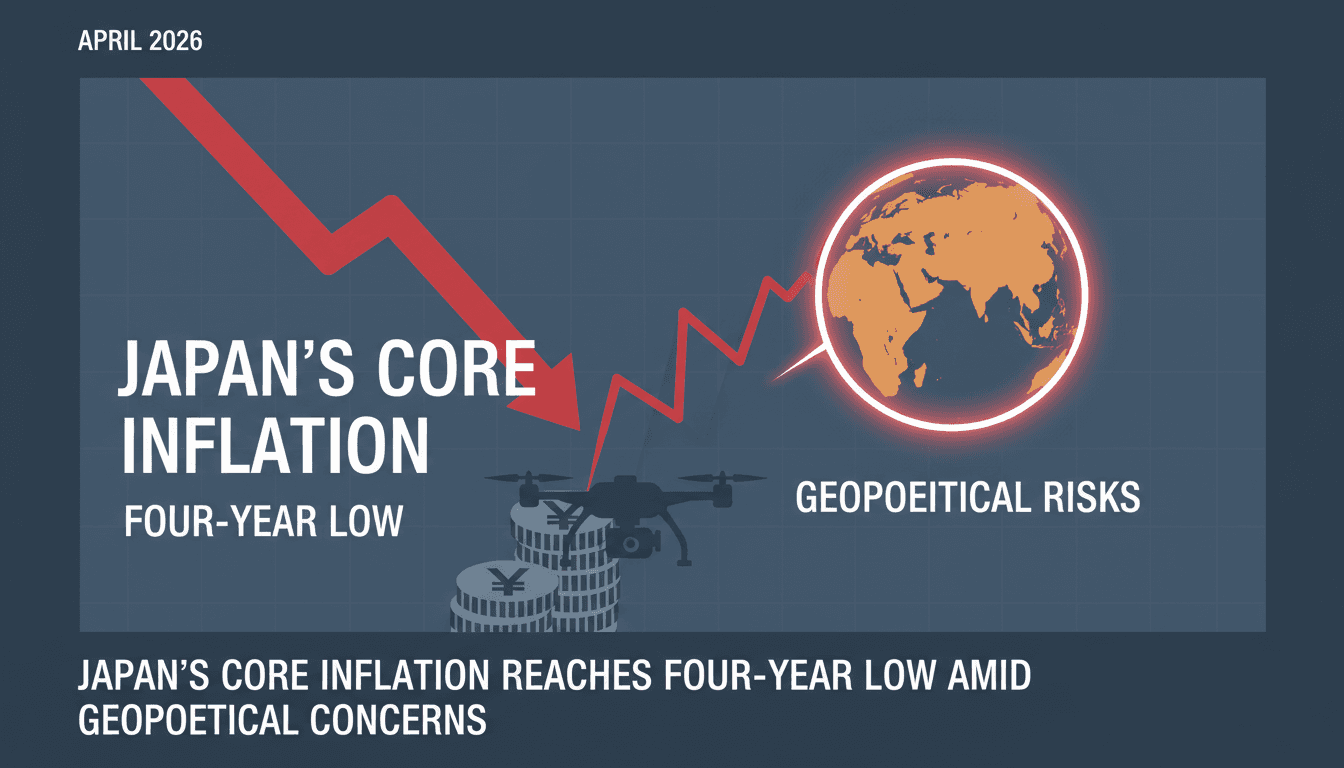
Japan's core inflation reaches four-year low amid geopolitical concerns
Here's what it means for you.
Japan's core inflation rate has dropped to its lowest level in four years, signaling a potential shift in the economic landscape. This decline, driven by government subsidies, may influence consumer spending and business investment decisions. As the Bank of Japan weighs its options for future rate hikes, stakeholders should remain vigilant about the interplay between domestic inflation trends and international geopolitical developments.
What happened
In April 2026, Japan's core inflation rate fell to a four-year low, reflecting a significant decrease in price pressures. This decline has been largely attributed to government subsidies on gasoline and education, which have helped stabilize costs for consumers. Despite this positive trend, the Bank of Japan is maintaining a cautious approach regarding potential interest rate hikes.
The ongoing geopolitical risks, particularly those stemming from the Middle East, are influencing the Bank of Japan's monetary policy considerations. As external factors continue to pose challenges, the central bank's decisions will be critical in navigating Japan's economic future.
The Context
The recent decline in Japan's core inflation is a notable development in the context of global economic uncertainties. Government subsidies have played a crucial role in curbing inflation, providing relief to consumers and businesses alike. However, the Bank of Japan's cautious stance indicates that it is not solely focused on domestic factors; international geopolitical dynamics are also at play.
As the situation evolves, the Bank of Japan's upcoming policy meetings will be closely monitored by market participants. The interplay between domestic inflation trends and external risks will be vital in shaping future monetary policy decisions, making this a pivotal moment for Japan's economy.
Takeaway
Looking ahead, stakeholders should keep an eye on the Bank of Japan's policy meetings for any indications of rate changes. The central bank's approach will likely be influenced by both the current inflation landscape and ongoing geopolitical events. As Japan navigates this period of low inflation, the balance between economic growth and external risks will be crucial.
The situation remains fluid, and any shifts in monetary policy could have significant implications for the broader economy. Observers should prepare for potential developments that may arise from both domestic and international fronts.
Social/economic commentary and analysis relevant to business and markets.
"WSJ blends data-driven economic insight with commentary on policy and society."
— A47 Editor
Japan Inflation Slows But Mideast Risks Keep Rate Hike on Table
Japan's inflation rate has shown signs of slowing, aided by gasoline and education subsidies, despite many companies raising prices at the start of the new fiscal year. This development indicates a cooling inflationary environment, with core inflatio...
Macro commentary, policy analysis, growth/inflation themes, and global outlooks.
"Contextual macro coverage that complements day-to-day market headlines."
— A47 Editor
Japan’s core inflation slows to 4-year low in April
Japan's core inflation has slowed to a four-year low in April, reflecting ongoing economic challenges as the core Consumer Price Index (CPI) remains below the Bank of Japan's (BOJ) target. This decline indicates a cooling inflationary environment, wh...
Key macro releases (CPI, jobs, PMIs), surprise indexes, and market implications.
"Great for data-print awareness and instant read-through to rates and risk assets."
— A47 Editor
Japan CPI cools in April; Core inflation falls further below BOJ target
Japan's Consumer Price Index (CPI) showed signs of cooling in April, with core inflation falling further below the Bank of Japan's (BOJ) target, highlighting ongoing economic challenges. Recent data indicated that while the core CPI rose by 1.8% year...