
Italy's GDP Growth Revised Upward to 0.3% in Q1 2026
Here's what it means for you.
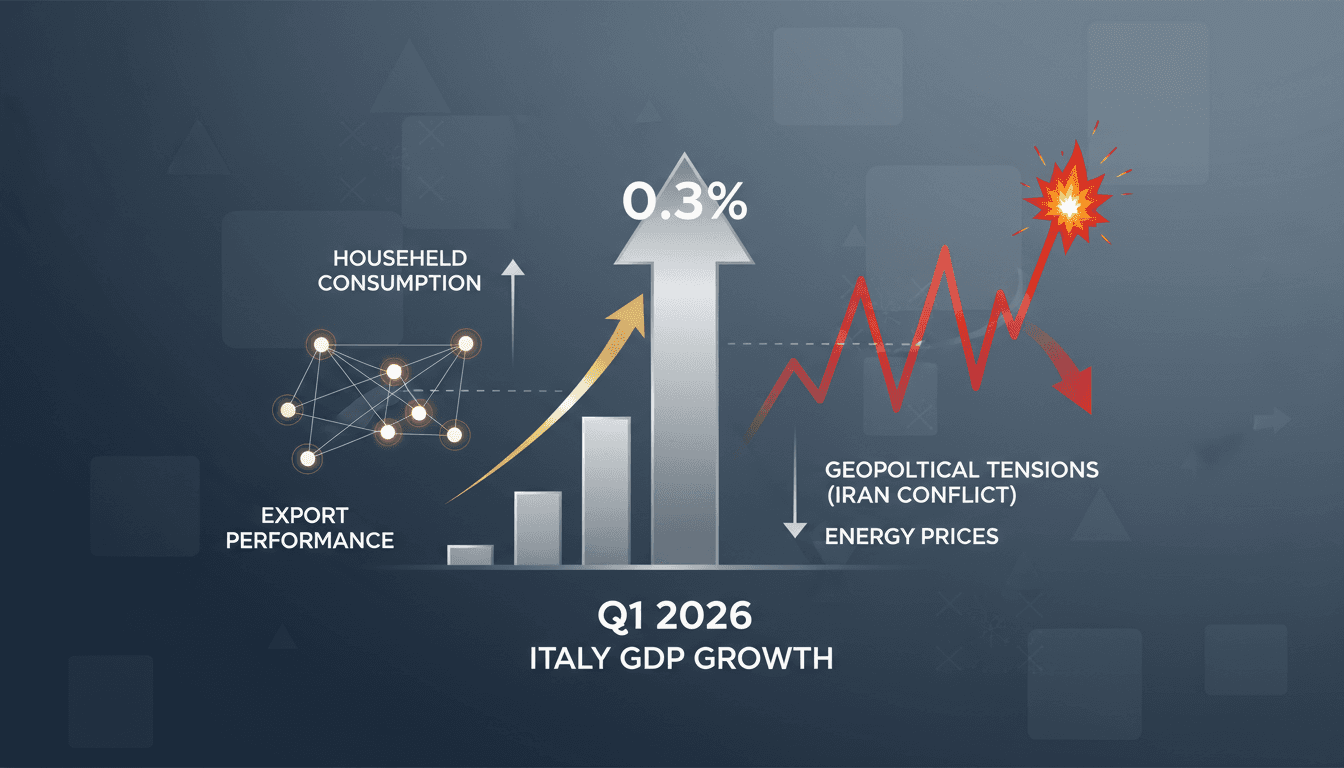
The upward revision of Italy's GDP growth to 0.3% in the first quarter of 2026 signals a more resilient economic landscape than previously anticipated. Increased household consumption and strong export performance are key drivers of this growth, suggesting potential stability in consumer confidence. However, rising energy prices and geopolitical tensions, particularly related to the Iran conflict, could pose challenges moving forward. This adjustment may influence market sentiment and policy decisions as stakeholders assess the sustainability of this growth trajectory. Investors and policymakers should remain vigilant regarding external factors that could impact Italy's economic performance.
What happened
Italy's GDP growth for the first quarter of 2026 has been revised upward to 0.3%, surpassing the initial estimate of 0.2%. This revision reflects a stronger-than-expected economic performance, primarily driven by a notable increase in household consumption and robust export activity. Household consumption rose significantly to 0.5% quarter-to-quarter, up from just 0.1% in the previous quarter.
Despite these positive indicators, government spending remained flat after a previous growth of 0.2%. The revision comes at a time when concerns are mounting over the potential impact of the ongoing Iran conflict on the economy.
The Context
The revision of Italy's GDP growth is significant as it highlights the economy's unexpected strength at the beginning of 2026. Increased household spending and strong exports have contributed to this positive outlook, even as rising energy prices and geopolitical tensions loom large. The situation in Iran is particularly concerning, as it could have far-reaching implications for global markets and Italy's economic stability.
Stakeholders, including policymakers and investors, are closely monitoring these developments. The balance between domestic consumption and external pressures will be crucial in determining the sustainability of Italy's economic growth in the coming months.
Takeaway
The upward revision in Italy's GDP growth suggests a degree of resilience in the economy, but external factors remain a significant concern. Rising energy prices could impact household consumption, while geopolitical tensions, particularly related to the Iran conflict, may hinder sustained growth.
As the situation evolves, it will be essential to monitor these external pressures and their potential effects on Italy's economic landscape. Stakeholders should remain alert to how these factors could influence market dynamics and policy responses in the near future.
UK and international business news, economics, and corporate coverage.
"The Guardian’s business section covers finance and markets with a progressive editorial tone."
— A47 Editor
Global stocks rise and oil price slips amid hopes of US-Iran peace deal - business live
Global stock markets experienced an uptick while oil prices declined, driven by optimism surrounding a potential peace agreement between the US and Iran. In Italy, the economy showed stronger-than-expected growth, with GDP rising by 0.3% in the first...
Key macro releases (CPI, jobs, PMIs), surprise indexes, and market implications.
"Great for data-print awareness and instant read-through to rates and risk assets."
— A47 Editor
Italy first quarter growth revised up as exports shine
Italy's first quarter growth has been revised upward, primarily driven by strong export performance, indicating a robust economic recovery. This revision reflects a positive shift in the country's economic landscape as it adapts to global market cond...
Global markets, investing, and macroeconomics from a premier financial newsroom.
"Bloomberg is respected for in-depth financial reporting and data-driven analysis."
— A47 Editor
Italy’s Growth Was Robust at Start of 2026 in Surprise Revision
Italy's economy experienced a robust growth revision at the start of 2026, surpassing initial estimates and maintaining momentum from the previous year, despite the looming impacts of the Iran war on global markets.