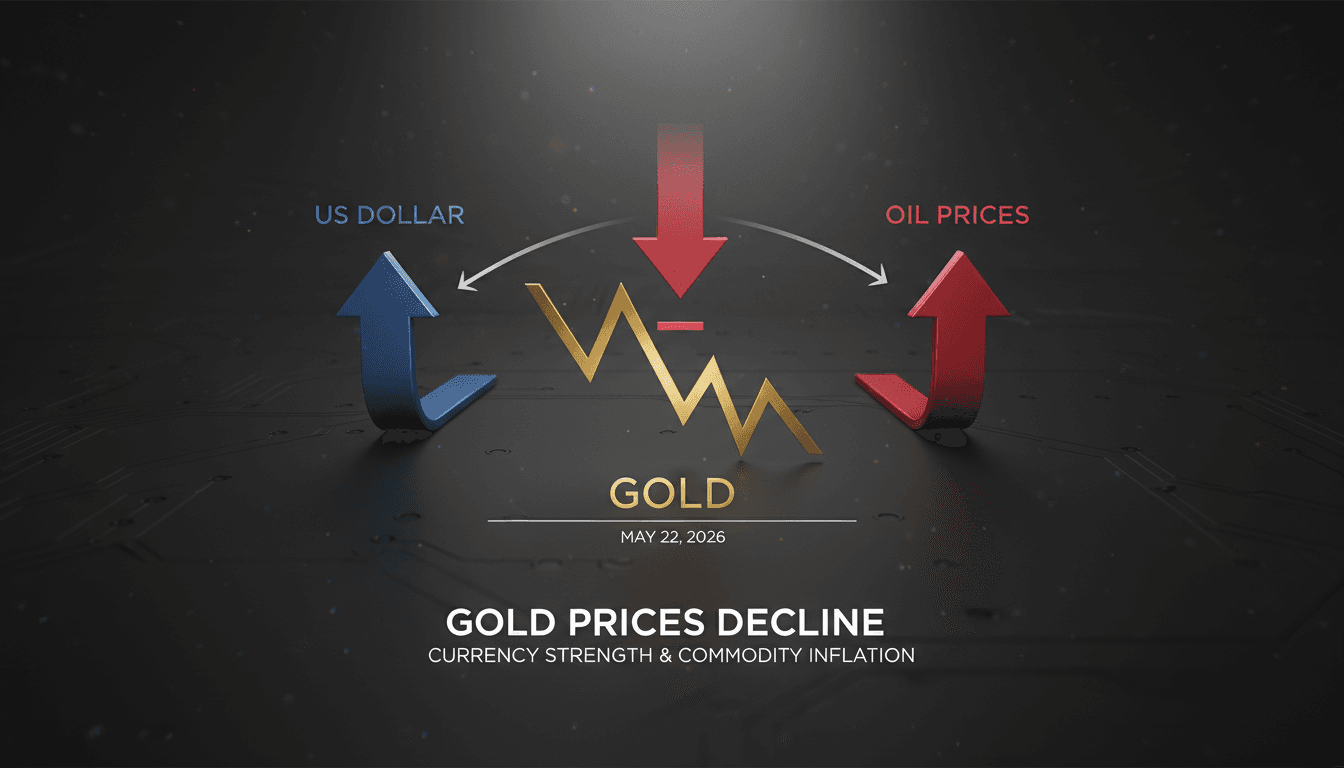
Gold prices decline amid strong US dollar and rising oil prices
Here's what it means for you.
The recent decline in gold prices signals a shift in market dynamics, primarily influenced by the strength of the US dollar and rising oil prices. Investors should be aware that these factors may lead to continued volatility in gold, impacting investment strategies and asset allocations. As inflation concerns grow, the interplay between energy markets and currency strength will be crucial for future price movements.
What happened
Gold prices have experienced a slight decline, primarily driven by a strengthening US dollar and increasing oil prices. This trend suggests that gold is on track for a potential second consecutive weekly loss, as inflation concerns continue to mount. The current market conditions indicate that external economic factors are significantly influencing gold prices.
As the dollar strengthens, it negatively impacts gold, traditionally viewed as a safe-haven asset. The rising oil prices further contribute to inflation worries, creating a challenging environment for gold investors. This combination of factors has led to a cautious outlook for gold in the near term.
The Context
The strength of the US dollar plays a pivotal role in the current decline of gold prices. A robust dollar typically makes gold more expensive for foreign investors, thereby reducing demand. Additionally, rising oil prices are contributing to inflation concerns, which can further complicate the economic landscape.
As inflation continues to be a pressing issue, market participants are closely monitoring these dynamics. The potential for a second consecutive weekly loss for gold highlights the sensitivity of this market to external economic pressures. Stakeholders, including investors and policymakers, must remain vigilant as these trends unfold.
Takeaway
Looking ahead, it will be essential to monitor oil price trends and their impact on gold. Economic indicators that may affect the strength of the US dollar will also be crucial in shaping future gold prices. The interplay between energy markets and currency strength is likely to continue influencing gold volatility in the coming weeks.
Investors should stay informed about these developments to make strategic decisions. The current market environment suggests that gold may remain under pressure as external factors evolve.
Jordanian news and regional updates.
"Roya News is a Jordanian outlet focused on breaking news and local affairs."
— A47 Editor
تقلبات حادة تضغط على الذهب قصير الأجل.. وتوقعات بقفزة نحو 8900 دولار للأونصة
Gold prices are currently experiencing sharp fluctuations, closely linked to energy markets, with forecasts suggesting a potential rise to $8,900 per ounce. This volatility reflects the ongoing dynamics in the precious metals market influenced by ext...
Arabic-language coverage of international news and geopolitics.
"RT Arabic is a Russian state-funded outlet often criticized for promoting Kremlin-aligned narratives."
— A47 Editor
تراجع الذهب متأثرا بقوة الدولار
Gold prices have declined today, indicating a potential for a second consecutive weekly loss, primarily influenced by the strength of the dollar.
Pan-Arab news coverage spanning politics, business, sports, and regional affairs.
"Asharq Al-Awsat reflects a broad Arab editorial perspective with strong attention to regional geopolitics."
— A47 Editor
أسعار الذهب تتراجع وسط قوة الدولار وصعود النفط
Gold prices experienced a slight decline on Friday, influenced by the strengthening of the US dollar and rising oil prices. This shift in the market reflects the ongoing dynamics between currency strength and commodity values.
Arabic-language economic and business reporting with strong UAE market relevance.
"Emarat Al Youm business coverage often centers UAE property, banking, consumer issues, and economic policy."
— A47 Editor
الذهب يتراجع مع ارتفاع النفط وتصاعد مخاوف التضخم الذهب يتراجع مع ارتفاع النفط وتصاعد مخاوف التضخم
Gold prices have experienced a slight decline today, marking a potential second consecutive weekly loss, influenced by rising oil prices and increasing inflation concerns.