
SpaceX rocket part crashes into the Moon creating new crater
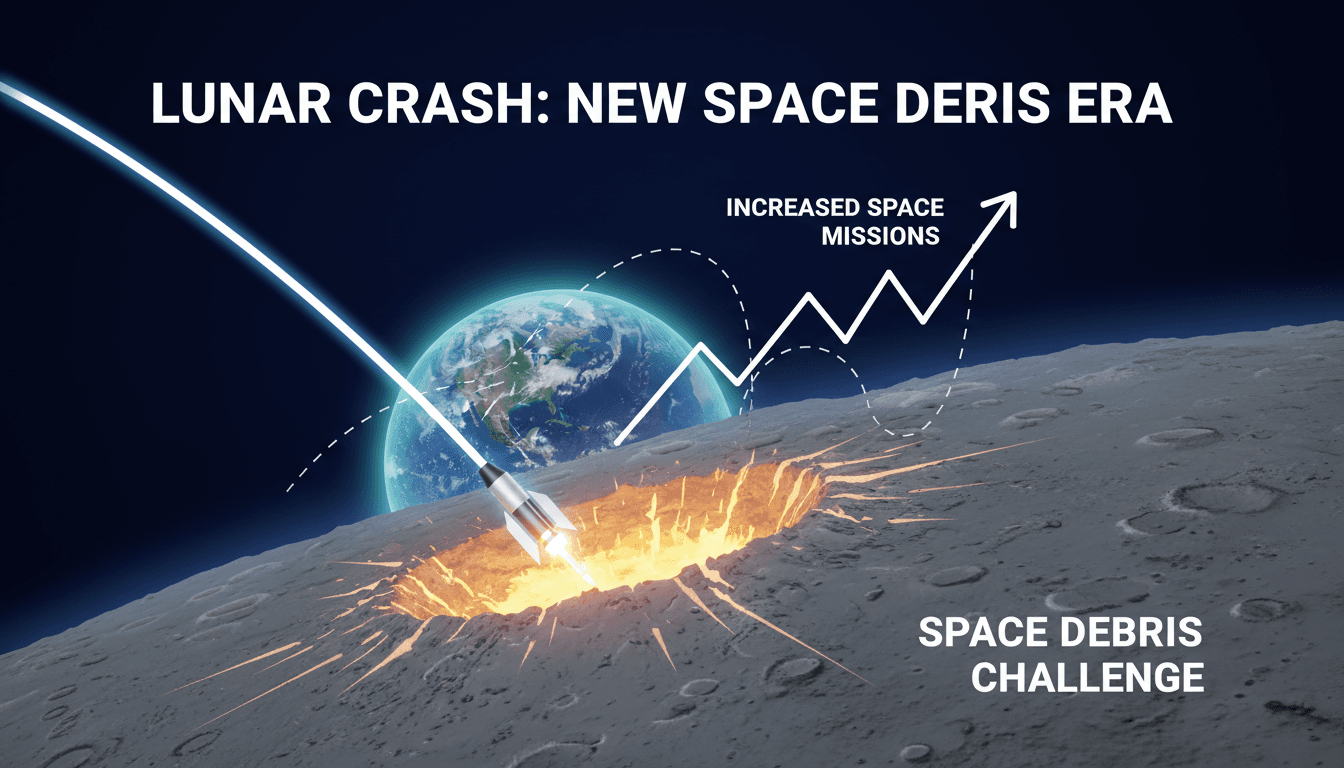
What happened
A SpaceX rocket part, believed to be the upper stage of a Falcon 9 rocket, has crashed into the Moon, creating a new crater. The incident occurred at an astonishing speed of approximately 8,700 kilometers per hour (5,400 miles per hour), emphasizing the force of the collision. The rocket part, estimated to be the size of a school bus, lost control before impacting the lunar surface.
This event has drawn attention from scientists and space agencies, who are now monitoring the situation to evaluate the implications for lunar exploration. The crash not only marks a significant event in space history but also raises concerns about the growing issue of space debris.
The Context
The crash of the SpaceX rocket part is a reflection of the increasing frequency of space missions and the challenges associated with managing space debris. As more entities engage in space exploration, the risk of collisions and the accumulation of debris in orbit and on celestial bodies like the Moon becomes a pressing concern.
This incident occurred on August 5, 2026, with further details emerging the following day regarding the size and speed of the rocket part. The implications of this event extend beyond the immediate impact, as it reignites discussions about the need for effective space debris management strategies among stakeholders in the space industry.
Takeaway
Looking ahead, the focus will shift to monitoring the newly formed crater and assessing its impact on lunar missions. Researchers will likely investigate the effects of space debris on future explorations, emphasizing the need for comprehensive management strategies.
As space exploration continues to expand, the importance of addressing space debris will only grow. Ensuring the safety of future missions and the integrity of celestial bodies will require collaboration among scientists, policymakers, and space agencies.
Jordanian news and regional updates.
"Roya News is a Jordanian outlet focused on breaking news and local affairs."
— A47 Editor
اصطدام صاروخ تابع لشركة سبيس إكس بسطح القمر بسرعة 5400 ميل في الساعة
The upper stage of SpaceX's Falcon 9 rocket collided with the Moon at a speed of 5,400 miles per hour, creating a significant impact event. This collision occurred on August 5, 2026, at 06:35 GMT, resulting in a crater approximately 27 meters wide.
Arabic-language sports reporting covering UAE competitions and major international events.
"Emarat Al Youm sports coverage is mainstream and accessible, with strong emphasis on UAE and regional sport."
— A47 Editor
حادث سير غريب من نوعه ! صاروخ يصطدم بالقمر بسرعة 8700 كيلومتر في الساعة حادث سير غريب من نوعه ! صاروخ يصطدم بالقمر بسرعة 8700 كيلومتر في الساعة
In a rare space incident, debris from a SpaceX rocket, owned by billionaire Elon Musk, collided with the surface of the Moon at a speed of 8,700 kilometers per hour. This event highlights the ongoing activities and potential risks associated with spa...
Arabic-language reporting on global and regional news.
"BBC Arabic is part of the BBC, generally regarded for editorial standards and broad international coverage."
— A47 Editor
جزء ضخم من صاروخ سبيس إكس يُعتقد أنه ارتطم بالقمر، فهل سيؤثر في الأرض؟
A large piece of a SpaceX rocket, comparable in size to a five-story building, is believed to have collided with the Moon, with scientists awaiting confirmation and monitoring for any resulting crater.
UAE-based English-language newspaper covering regional politics, economics, and global affairs.
"The National reflects Emirati policy perspectives while maintaining international editorial standards."
— A47 Editor
SpaceX rocket part 'size of school bus' believed to have crashed into Moon
A piece of a SpaceX Falcon 9 rocket, approximately the size of a school bus and weighing around four tons, is believed to have crashed into the Moon on August 5, 2026, at a speed of 5,400 miles per hour. This impact is expected to create a new lunar ...
Arabic-language coverage of international news and geopolitics.
"RT Arabic is a Russian state-funded outlet often criticized for promoting Kremlin-aligned narratives."
— A47 Editor
صاروخ "سبيس إكس" يصطدم بالقمر محدثا فوهة جديدة
A SpaceX rocket lost control and collided with the surface of the Moon, creating a new crater and a cloud of dust. This incident has reignited discussions about space debris and its implications for lunar exploration.