
SpaceX Falcon 9 rocket crash site documented by South Korean lunar orbiter
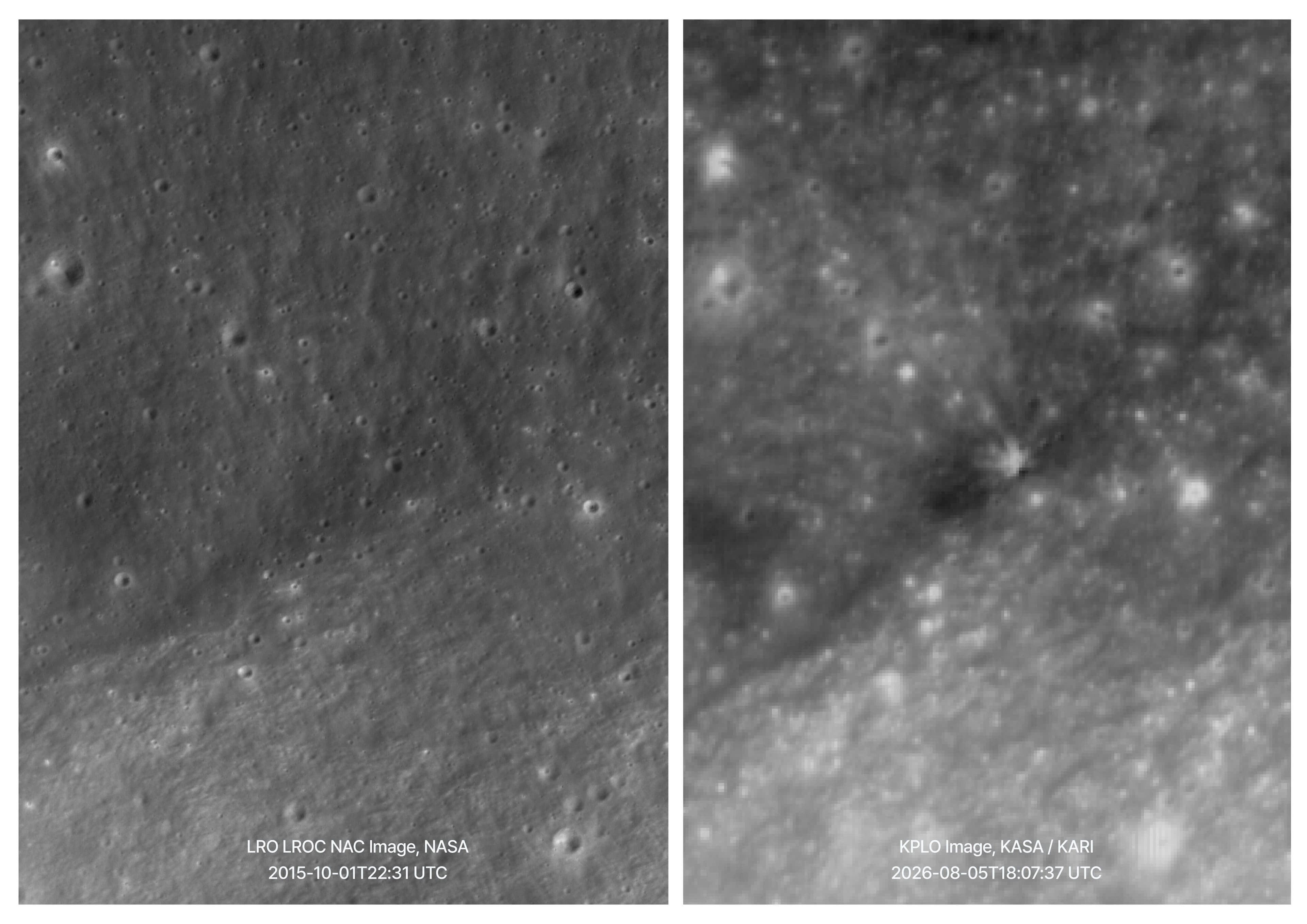
What happened
A SpaceX Falcon 9 rocket crashed on the moon, resulting in a crater that has been captured in images by a South Korean satellite. The Korea Aerospace Research Institute released these images, which reveal the crater's diameter to be approximately 60 feet. This event occurred in August 2026 and marks a significant moment in the ongoing dialogue about commercial spaceflight and its implications for lunar exploration.
The crater's documentation illustrates the increasing visibility of private space missions and their potential impact on celestial bodies. Various sources, including WIRED, Engadget, and Gulf News, have reported on the incident, emphasizing its relevance in the context of modern space activities.
The Context
The crash site of the Falcon 9 rocket has been documented at a time when commercial space activities are on the rise. The Korea Aerospace Research Institute's involvement highlights the importance of international cooperation in monitoring and understanding the effects of these missions. As private companies like SpaceX push the boundaries of space exploration, the implications for lunar environments are becoming a focal point for researchers and policymakers alike.
NASA's estimation of the crater's size further emphasizes the scale of the impact, raising questions about the sustainability of such missions. The event serves as a critical reminder of the need for responsible practices in the burgeoning field of commercial spaceflight.
Takeaway
As commercial space missions increase, the monitoring of their impact on celestial bodies will become increasingly important. Future missions by SpaceX and other companies to the moon will likely draw greater scrutiny from both the public and regulatory bodies. The developments in lunar exploration technology and satellite imaging will play a crucial role in understanding these impacts.
The ongoing discussions surrounding sustainable practices in space exploration will shape the future of lunar missions. Stakeholders must prioritize the preservation of lunar environments as they navigate the complexities of commercial space activities.
Emerging technologies, digital transformation, IT, and cultural impact of tech.
"WIRED covers the intersection of technology, culture, and politics with a progressive, forward-looking editorial stance."
— A47 Editor
Here Are the First Images of the Crater Left on the Moon by SpaceX’s Rocket
The Korea Aerospace Research Institute has released the first images of a crater on the Moon, created by a SpaceX Falcon 9 rocket that collided with the lunar surface. This impact occurred after the rocket had been drifting in space for over a year, ...
Consumer technology news with AI coverage.
"Gadget and tech site reporting on AI in products."
— A47 Editor
Korean lunar orbiter snaps first pics of the SpaceX Falcon 9 crash site on the moon
The Korean lunar orbiter has captured its first images of the crash site of a SpaceX Falcon 9 rocket on the moon, which NASA estimates has created a crater approximately 60 feet wide. This incident follows the rocket's unintended collision with the l...
Covers consumer technology, electronics, gadgets, and product reviews.
"Engadget is a trusted source for gadget reviews and consumer tech news, known for its hands-on analysis and industry coverage."
— A47 Editor
Korean lunar orbiter snaps first pics of the SpaceX Falcon 9 crash site on the moon
The Korean lunar orbiter has captured its first images of the crash site of a SpaceX Falcon 9 rocket on the moon, which NASA estimates has created a crater approximately 60 feet wide. This incident follows the rocket's unintended collision with the l...
UAE-based newspaper covering Gulf politics, society, and international developments.
"Gulf News is one of the UAE’s most prominent English-language publications."
— A47 Editor
South Korean satellite captures before and after views of SpaceX rocket's moon crash
A South Korean satellite, the Danuri spacecraft, has captured before and after images of the Moon's surface following the crash of a SpaceX Falcon 9 rocket stage on August 5, 2026. The rocket, weighing approximately four tons, impacted the lunar surf...
A curated Gulf News feed featuring major stories across news, business, opinion, and lifestyle.
"Gulf News is a major UAE newspaper whose featured stories feed reflects a broad editorial mix shaped for a Gulf audience."
— A47 Editor
South Korean satellite captures before and after views of SpaceX rocket's moon crash
A South Korean satellite, the Danuri spacecraft, has captured before and after images of the Moon's surface following the crash of a SpaceX Falcon 9 rocket stage on August 5, 2026. The rocket, weighing approximately four tons, impacted the lunar surf...