
Jensen Huang Resigns as Megaspeed Probe Exposes Singapore Chip Export Control Vulnerabilities
Why it matters
The convergence of executive exposure and semiconductor transshipment inquiries reveals the mounting structural costs facing neutral trading hubs caught between competing global superpowers.
What happened (in 30 seconds)
- Executive leadership change: Jensen Huang resigned as Nvidia CEO on November 13, 2026, following the disclosure of an extramarital affair with Alice Huang, a former executive at Singapore-based Megaspeed.
- Transshipment scrutiny: Megaspeed has been under formal scrutiny by Singapore authorities since February 2025 regarding false declarations on server shipments suspected of routing restricted Nvidia artificial intelligence chips to China.
- Cross-border regulatory friction: Singapore’s Ministry of Home Affairs confirmed that Alice Huang was released in February 2026 due to insufficient evidence for formal charges, but she remains barred from re-entering Singapore after providing inaccurate information during the inquiry.
The context you actually need
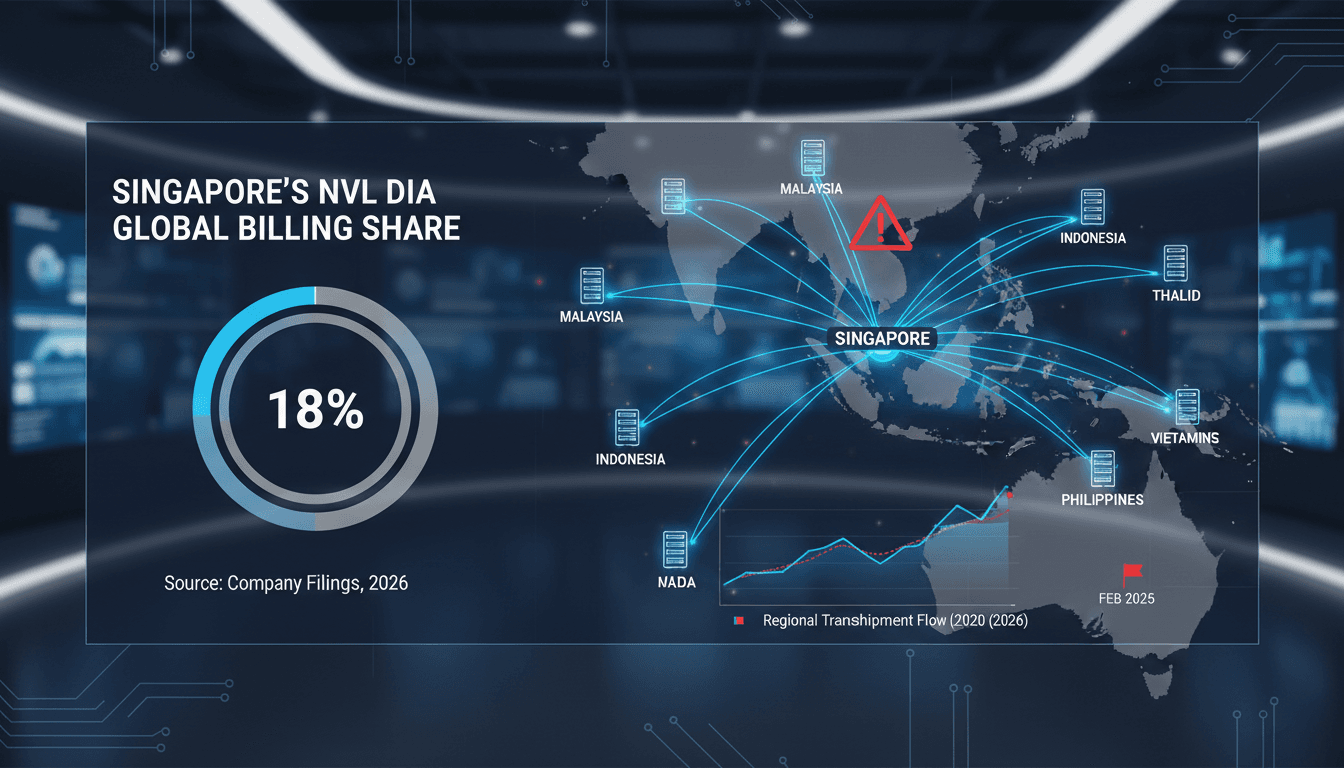
- The revenue routing footprint: In the fiscal year leading to January 2025, Singapore accounted for 18% of Nvidia's total billing revenue—nearly one-fifth of company earnings—serving primarily as an invoicing and transit hub rather than a final consumer market.
- Export control architecture: Since 2022, unilateral United States trade directives have restricted the direct sale of advanced computing semiconductors to mainland Chinese entities, shifting demand to regional third-party intermediaries.
- The entrepôt operating framework: Singapore functions under a neutral commercial mandate designed to facilitate global trade flows, a framework that increasingly conflicts with extraterritorial export enforcement from Washington.
What's really happening
The leadership exit at Nvidia exposes a deeper operational fracture in the hardware architecture powering global artificial intelligence. Beneath the personal scandal lies an operational reality: global trade hubs operating on traditional principles of commercial neutrality are finding it difficult to insulate themselves from unilateral technology restrictions.
Singapore’s financial and logistics infrastructure has long operated on the principle of non-aligned efficiency. Companies route hardware billing through the city-state because of capital convertibility, stable corporate governance, and proximity to manufacturing corridors across Southeast Asia. Nvidia billing 18% of its top line through Singapore reflects standard global enterprise design, where billing centers manage regional fulfillment while physical inventory disperses across data centers in Malaysia, Indonesia, and Thailand.
However, the enforcement mechanism of the US Bureau of Industry and Security relies on controlling end-use, regardless of where an invoice settles. When third-party distributors like Megaspeed acquire enterprise-grade server infrastructure, determining whether those computing clusters remain within Southeast Asian facilities or offer computing power to restricted entities becomes an operational challenge. Singapore initiated its investigation into Megaspeed in February 2025 based on specific export documentation discrepancies. Yet, Singapore’s Ministry of Home Affairs noted that cooperation from US regulatory bodies and external equipment vendors was limited, underscoring the coordination friction between local legal standards and foreign policy enforcement.
This disconnect leaves neutral entrepôt economies in a precarious middle tier. When an intermediary jurisdiction strictly enforces local laws, it requires clear evidence of domestic statutory violations to sustain criminal prosecution. Alice Huang’s impounded passport was returned, and she was released in February 2026 without formal charges due to a lack of actionable legal evidence, even as administrative measures barred her re-entry.
For the semiconductor industry, this structural dynamic creates substantial friction. Multinationals depend on clear regulatory boundaries. As executive relationships intersect with sensitive supply chain routing, the tolerance for opaque distribution channels narrows. Global technology firms face immediate structural pressure to audit second- and third-tier distribution partners, verify downstream computing clusters, and absorb higher compliance expenses to preserve access to Western chip architectures.
Who feels it first (and how)
- Enterprise technology procurement teams: Chief technology officers and infrastructure leads routing hardware orders via Southeast Asian channels face intensified compliance audits and extended delivery verification cycles.
- Singaporean and regional data center operators: Facilities in Malaysia, Indonesia, and Thailand hosting imported server clusters face expanded end-user checks from component suppliers monitoring hardware destinations.
- Global logistics and compliance officers: Entrepôt facilitators managing high-value electronics trade must implement higher proof-of-destination thresholds to manage secondary sanctions risk.
What to watch next
- Downstream export licensing revisions: Watch for formal adjustments from the US Bureau of Industry and Security targeting Southeast Asian data center hubs, which will indicate whether unilateral export controls are expanding geographically.
- Singapore commercial enforcement guidelines: Monitor updates from the Singapore Ministry of Home Affairs and trade authorities regarding documentation requirements for advanced electronics transit, signalling tighter internal border policing.
- Nvidia global distribution disclosures: Track Nvidia's upcoming quarterly financial reports to observe whether Singapore's 18% billing share shifts toward other geographic reporting jurisdictions to mitigate regulatory focus.
Jensen Huang stepped down on November 13, 2026; Megaspeed was placed under investigation by Singapore authorities in February 2025; Alice Huang was cleared of criminal charges for lack of evidence but barred from re-entering Singapore; Singapore billed 18% of Nvidia sales in the year to January 2025.
Scrutiny will intensify on Southeast Asian data centers serving as proxy compute locations for restricted markets, prompting hardware manufacturers to contractually mandate deeper inventory tracking.
Whether US authorities will penalize third-party hardware distributors named in ongoing probes, and whether regional transshipment centers will adopt formal joint enforcement protocols with Western trade bodies.
Frequently Asked Questions
- Why it matters?
- The convergence of executive exposure and semiconductor transshipment inquiries reveals the mounting structural costs facing neutral trading hubs caught between competing global superpowers.
- What happened (in 30 seconds)?
- Executive leadership change: Jensen Huang resigned as Nvidia CEO on November 13, 2026, following the disclosure of an extramarital affair with Alice Huang, a former executive at Singapore-based Megaspeed. Transshipment scrutiny: Megaspeed has been under formal scrutiny by Singapore authorities since February 2025 regarding false declarations on server shipments suspected of routing restricted Nvidia artificial intelligence chips to China. Cross-border regulatory friction: Singapore’s Ministry of
- What's really happening?
- The leadership exit at Nvidia exposes a deeper operational fracture in the hardware architecture powering global artificial intelligence. Beneath the personal scandal lies an operational reality: global trade hubs operating on traditional principles of commercial neutrality are finding it difficult to insulate themselves from unilateral technology restrictions. Singapore’s financial and logistics infrastructure has long operated on the principle of non-aligned efficiency. Companies route hardwa
- Who feels it first (and how)?
- Enterprise technology procurement teams: Chief technology officers and infrastructure leads routing hardware orders via Southeast Asian channels face intensified compliance audits and extended delivery verification cycles. Singaporean and regional data center operators: Facilities in Malaysia, Indonesia, and Thailand hosting imported server clusters face expanded end-user checks from component suppliers monitoring hardware destinations. Global logistics and compliance officers: Entrepôt facilita
- What to watch next?
- Downstream export licensing revisions: Watch for formal adjustments from the US Bureau of Industry and Security targeting Southeast Asian data center hubs, which will indicate whether unilateral export controls are expanding geographically. Singapore commercial enforcement guidelines: Monitor updates from the Singapore Ministry of Home Affairs and trade authorities regarding documentation requirements for advanced electronics transit, signalling tighter internal border policing. Nvidia global di
International coverage of politics, culture, and current affairs.
"BBC News is widely regarded as a reputable international news organization, known for its impartial tone and public service mandate."
— A47 Editor
How the Jensen Huang scandal created a headache for business-friendly Singapore
Nvidia CEO Jensen Huang has resigned after reports, citing a New York Times account, that U.S. intelligence believed he was targeted by a Chinese intelligence operation involving an extramarital affair with Singapore-based Chinese tech executive Alic...
Business, investment, entrepreneurship, leadership, and innovation.
"Forbes is known for its coverage of business leaders, market trends, and entrepreneurial ventures with a pro-business editorial stance."
— A47 Editor
Jensen Huang Ousted: Timeline Of The Nvidia Scandal
Nvidia co-founder and CEO Jensen Huang has been ousted after a turbulent week in which he acknowledged an extramarital affair in a message to employees. The move followed reports citing a New York Times account that U.S. intelligence believed he was ...
Business and tech news excluding paywalled content.
"High-volume business/tech outlet with frequent AI coverage."
— A47 Editor
The Jensen Huang scandal is casting a shadow over data centers halfway across the world
Business Insider reports that the Jensen Huang scandal is casting a shadow over AI data center operations in Southeast Asia, with industry sources saying the controversy could bring heightened scrutiny and higher costs for infrastructure operators th...
Business, investment, entrepreneurship, leadership, and innovation.
"Forbes is known for its coverage of business leaders, market trends, and entrepreneurial ventures with a pro-business editorial stance."
— A47 Editor
Jensen Huang Ousted: Timeline Of The Nvidia Scandal
Nvidia CEO and co-founder Jensen Huang has been ousted after a tumultuous week in which he acknowledged an extramarital affair in a message to employees, following reports citing a New York Times account that U.S. intelligence believed he was targete...
Business and tech news excluding paywalled content.
"High-volume business/tech outlet with frequent AI coverage."
— A47 Editor
The biggest winner from Jensen Huang's downfall is China
The biggest winner from Jensen Huang's downfall is China, according to Business Insider. Nvidia CEO Jensen Huang acknowledged in a memo to employees an intimate relationship with Alice Huang, a Megaspeed executive whom U.S. officials determined was w...
Startup news with frequent AI coverage.
"Covers launches, funding, and product updates in AI."
— A47 Editor
Is Jensen Huang’s bad behavior more commonplace than it seems?
Nvidia CEO Jensen Huang, the company's largest individual shareholder, acknowledged in a memo to employees an intimate relationship with Alice Huang, a Megaspeed executive whom U.S. officials determined was working for Chinese intelligence, prompting...