
Jensen Huang's Southeast Asia Data Center Network Supplied Advanced Nvidia Chips to Chinese Firms Despite U.S. Export Controls
Why it matters
The regulatory breakdown between hardware origin and computing jurisdiction shows that export curbs on physical chips cannot prevent remote processing access without strict surveillance of third-country infrastructure.
What happened (in 30 seconds)
- An offshore computing network was exposed: A Wall Street Journal investigation revealed that former Nvidia CEO Jensen Huang helped establish data center hubs across Southeast Asia that routed high-end semiconductor processing power to Chinese organizations.
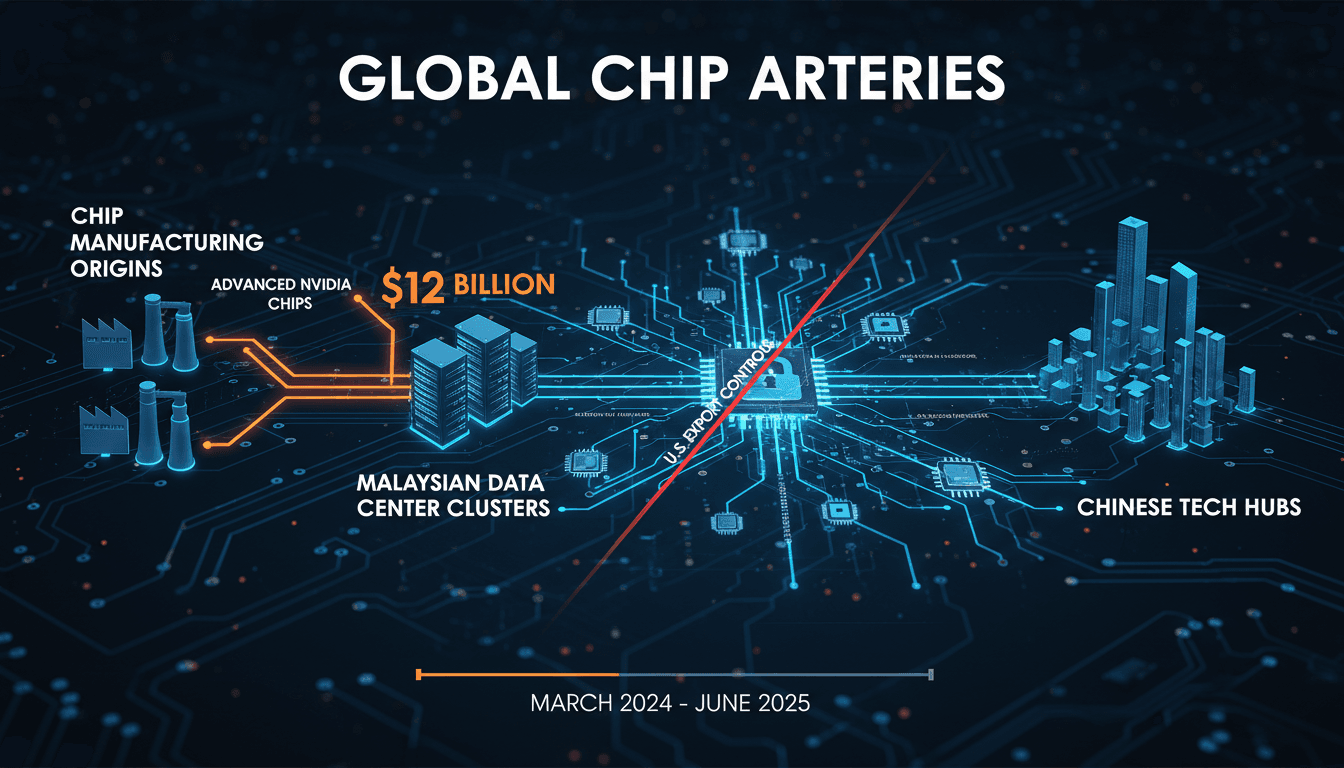
- Capital flowed through third-party intermediaries: Singapore-based data center operator Megaspeed organized semiconductor shipments totaling nearly $12 billion between March 2024 and June 2025, enabling Chinese entities to utilize advanced GPUs via facilities built in Malaysia.
- Executive leadership collapsed under dual investigations: Following discoveries of an undisclosed personal relationship between Huang and Megaspeed executive Alice Huang—alongside regulatory probes by the U.S. Commerce Department, the U.S. Department of Justice, and Singapore authorities—Nvidia’s board ousted Huang in mid-November 2026.
The context you actually need
- Direct semiconductor bans created an arbitrage corridor: Successive U.S. trade policies restricted Chinese buyers from directly acquiring high-tier processors such as the Nvidia H100 series, directly incentivizing firms to lease processing time in non-restricted jurisdictions rather than import physical hardware.
- Southeast Asia became an operational hub: Construction escalated throughout 2024 and 2025 across industrial parks such as Senawang in Malaysia, turning the region into a destination for hosting dense clusters of high-performance artificial intelligence chips outside domestic Chinese borders.
- Corporate revenue incentives clashed with geopolitical limits: Nvidia balanced compliance obligations against structural demand from Chinese technology organizations, sustaining substantial regional revenue by selling advanced hardware to third-party data center operators located in Southeast Asia.
What's really happening
The arrangement orchestrated across Singapore and Malaysia illustrates the fundamental tension between territorial trade policy and borderless compute infrastructure. When U.S. export restrictions targeted the physical shipment of advanced artificial intelligence processors to mainland China, they operated under the assumption that controlling hardware transit points would restrict machine learning capabilities. Instead, the restrictions altered the commercial mechanism: rather than purchasing physical microchips, Chinese firms shifted to buying compute cycles delivered over international fiber networks.
Between March 2024 and June 2025, Megaspeed coordinated transactions worth $12 billion in advanced processors. These processors were delivered not to Shenzhen or Beijing, but to commercial facilities across Southeast Asia, including extensive sites in Senawang, Malaysia. Once installed, these GPUs operated within facilities designed to deliver high-throughput, low-latency processing. Chinese artificial intelligence organizations, including affiliates of Alibaba, accessed these clusters remotely. For the enterprise end-user in China, the physical location of the silicon was irrelevant; functional parity was achieved through remote infrastructure management.
This structure aligned the commercial interests of multiple stakeholders. For Nvidia, shipping large allocations of processors to Southeast Asian cloud infrastructure providers sustained corporate top-line growth across Asia, offsetting domestic Chinese sales losses that resulted from U.S. regulatory bars. For intermediary operators like Megaspeed, providing data center capacity yielded substantial enterprise margins by acting as an offshore compute bridge. For Chinese firms, the model preserved their access to frontier training clusters, bypassing physical semiconductor embargoes.
The breakdown of this operational system was not triggered by standard trade audits, but by executive compromise. The disclosure of Huang’s personal relationship with Megaspeed executive Alice Huang—who drew scrutiny from U.S. officials over alleged ties to foreign intelligence activities—prompted internal corporate reviews and regulatory intervention. This development forced Nvidia’s board of directors to remove its founding chief executive in mid-November 2026 to contain legal exposure across multiple jurisdictions.
The systemic consequence extends far beyond leadership changes. U.S. authorities and Singaporean regulators are now examining how intermediate hosting services facilitate regulatory circumvention. Because the physical equipment entered approved jurisdictions under standard commercial invoices, regulatory bodies must determine whether leasing remote compute access constitutes an unauthorized transfer of restricted dual-use technology. This operational pivot shifts global semiconductor enforcement from tracking freight manifests at ports to monitoring cross-border cloud processing, data packet routing, and foreign equity structures inside third-party data centers.
Who feels it first (and how)
- Enterprise technology officers in multinational firms: Infrastructure architects must re-evaluate third-party cloud deployments across Southeast Asia to ensure off-premises computing footprints do not intersect with targeted facilities.
- Regional data center operators in Malaysia and Singapore: Data center builders face expanded foreign investment scrutiny, elevated compliance burdens, and possible pauses on hardware shipments while authorities review customer rosters.
- Hardware supply chain and procurement teams: Semiconductor buyers face lengthened customs reviews and end-use certification requirements for GPU clusters deployed anywhere in the Asia-Pacific territory.
- Chinese artificial intelligence development teams: Model training operations face immediate capacity constraints and higher compute costs as offshore clusters become subjected to regulatory enforcement and asset freezes.
What to watch next
- U.S. Commerce Department jurisdictional updates: Regulatory revisions that formally classify remote cloud leasing of restricted hardware as an export violation will indicate whether Washington intends to police digital compute consumption worldwide.
- Asset dispositions and audit filings from Megaspeed: Liquidation, structural asset restructuring, or enforcement actions regarding Megaspeed’s $12 billion chip inventory will reveal how host nations handle non-compliant computational infrastructure.
- Nvidia's regional revenue adjustments in quarterly filings: Disclosures regarding Asian data center sales volumes under interim leadership will show the direct balance-sheet effect of severing third-party proxy purchasing channels.
Megaspeed coordinated $12 billion in advanced Nvidia hardware deliveries to Southeast Asian facilities between 2024 and 2025; Jensen Huang was removed from his post as Nvidia CEO following an internal review; U.S. and Singaporean authorities have opened formal regulatory inquiries.
Export control agencies will broaden compliance definitions to require physical hardware providers to identify the ultimate beneficial users of remote compute clusters, ending the distinction between on-premises ownership and remote infrastructure leasing.
The extent to which physical chips deployed across facilities in Malaysia were smuggled across borders into mainland China versus accessed entirely via remote cloud arrangements remains subject to active investigation.
Frequently Asked Questions
- Why it matters?
- The regulatory breakdown between hardware origin and computing jurisdiction shows that export curbs on physical chips cannot prevent remote processing access without strict surveillance of third-country infrastructure.
- What happened (in 30 seconds)?
- An offshore computing network was exposed: A Wall Street Journal investigation revealed that former Nvidia CEO Jensen Huang helped establish data center hubs across Southeast Asia that routed high-end semiconductor processing power to Chinese organizations. Capital flowed through third-party intermediaries: Singapore-based data center operator Megaspeed organized semiconductor shipments totaling nearly $12 billion between March 2024 and June 2025, enabling Chinese entities to utilize advanced GP
- What's really happening?
- The arrangement orchestrated across Singapore and Malaysia illustrates the fundamental tension between territorial trade policy and borderless compute infrastructure. When U.S. export restrictions targeted the physical shipment of advanced artificial intelligence processors to mainland China, they operated under the assumption that controlling hardware transit points would restrict machine learning capabilities. Instead, the restrictions altered the commercial mechanism: rather than purchasing p
- Who feels it first (and how)?
- Enterprise technology officers in multinational firms: Infrastructure architects must re-evaluate third-party cloud deployments across Southeast Asia to ensure off-premises computing footprints do not intersect with targeted facilities. Regional data center operators in Malaysia and Singapore: Data center builders face expanded foreign investment scrutiny, elevated compliance burdens, and possible pauses on hardware shipments while authorities review customer rosters. Hardware supply chain and p
- What to watch next?
- U.S. Commerce Department jurisdictional updates: Regulatory revisions that formally classify remote cloud leasing of restricted hardware as an export violation will indicate whether Washington intends to police digital compute consumption worldwide. Asset dispositions and audit filings from Megaspeed: Liquidation, structural asset restructuring, or enforcement actions regarding Megaspeed’s $12 billion chip inventory will reveal how host nations handle non-compliant computational infrastructure.
Tech business coverage, major deals, product launches, and Silicon Valley trends.
"WSJ’s tech section offers authoritative reporting on the intersection of technology and business, including exclusive industry analysis."
— A47 Editor
How Jensen Huang Built the Backdoor Route That Keeps Beijing in the AI Race
The Wall Street Journal reports that massive data centers in Southeast Asia have supplied computing power to Chinese companies, and that this infrastructure has also served as cover for alleged chip smuggling, with Nvidia CEO Jensen Huang at the cent...
Global political, business, and cultural coverage from WSJ international desks.
"The Wall Street Journal offers extensive international reporting with a reputation for financial insight and a center-right editorial stance."
— A47 Editor
How Jensen Huang Built the Backdoor Route That Keeps Beijing in the AI Race
The Wall Street Journal reports that massive data centers in Southeast Asia have provided crucial computing power for Chinese companies, and that these facilities also served as cover for alleged chip smuggling, a route tied to Nvidia CEO Jensen Huan...
Corporate news, economic trends, and markets with UK and global scope.
"BBC News is widely regarded as reputable and impartial, with a public service mandate."
— A47 Editor
How the Jensen Huang scandal created a headache for business-friendly Singapore
Nvidia CEO Jensen Huang has stepped down after acknowledging an extramarital affair with Alice Huang, a Chinese businesswoman whom U.S. intelligence assessments reportedly identified as a suspected Chinese spy, a claim Beijing has denied. The scandal...
International coverage of politics, culture, and current affairs.
"BBC News is widely regarded as a reputable international news organization, known for its impartial tone and public service mandate."
— A47 Editor
How the Jensen Huang scandal created a headache for business-friendly Singapore
Nvidia CEO Jensen Huang has resigned after reports, citing a New York Times account, that U.S. intelligence believed he was targeted by a Chinese intelligence operation involving an extramarital affair with Singapore-based Chinese tech executive Alic...
Startup news with frequent AI coverage.
"Covers launches, funding, and product updates in AI."
— A47 Editor
Export-banned Nvidia chips are behind China’s most powerful AI models — uh-oh, Jensen!
New research reported by TechCrunch indicates that some of China's most advanced AI models were trained on Nvidia chips that are subject to US export bans. The findings come as Nvidia's co-founder and CEO Jensen Huang has been ousted by the company's...