
Brent Crude Falls Below $94 as IEA Projects Q4 2026 Supply Surplus Outweighs Hormuz Risks
What happened
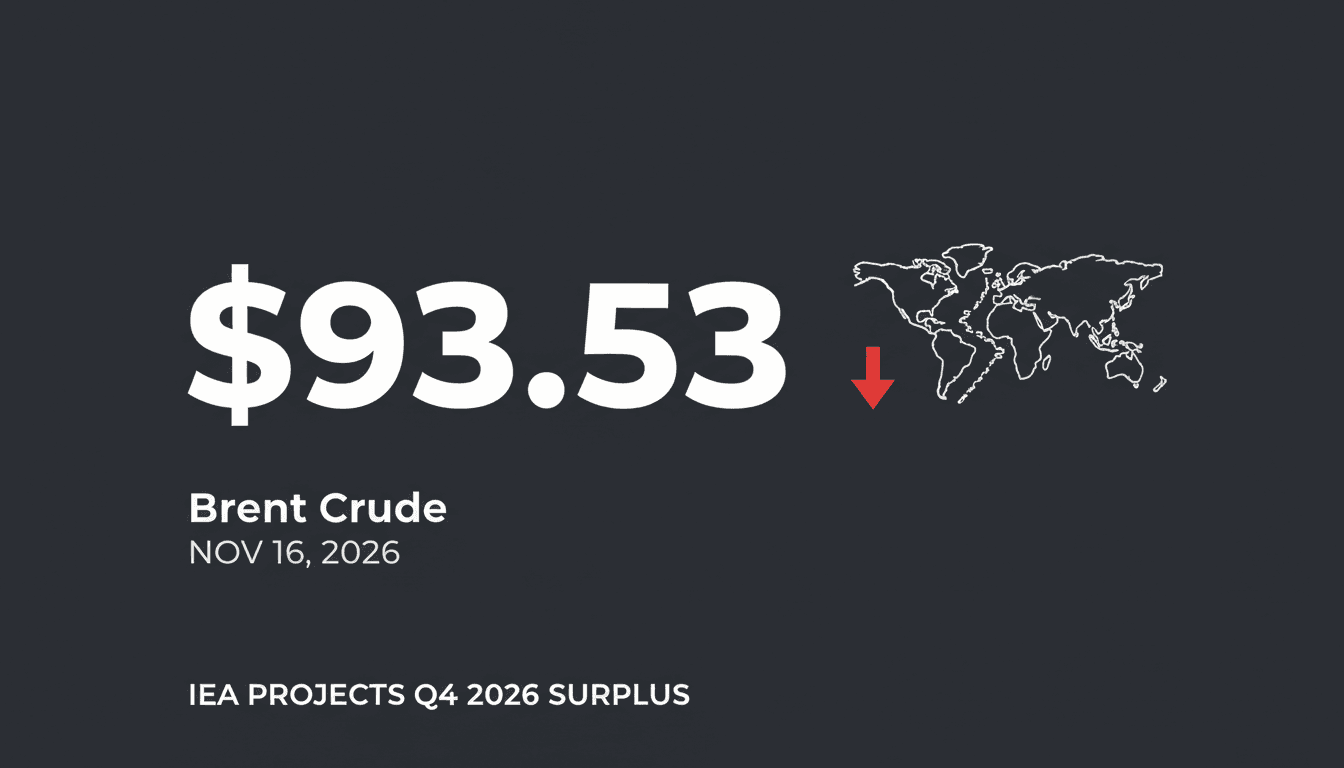
Brent crude fell roughly 2% to trade at $93.53 per barrel on November 16, 2026, dropping near a two-month low as expanding global inventories neutralized geopolitical concerns from maritime incidents in the Strait of Hormuz.
The Context
* Supply overtakes regional tension: Middle East exports recovered faster than anticipated following October peaks near $120, blunting market reaction even after an unidentified projectile caused an engine room fire on a tanker in the Strait of Hormuz. * Forecasted market overhang: The International Energy Agency reported global Q4 production will average 105 million barrels per day, outstripping demand as output outpaces geopolitical supply disruptions. * Political calculus cools markets: Post-election shifts in the United States tempered escalation fears around ongoing regional conflicts, shifting institutional trader sentiment from risk premiums back to fundamental balance sheets.
The Number
— the International Energy Agency's projected fourth-quarter global oil surplus over total demand, offering global operators a buffer against short-term freight spikes and transport price volatility.
Takeaway
Watch the November 29 OPEC+ policy meeting for production adjustments heading into 2027, as producers balance historic lows in the US Strategic Petroleum Reserve against persistent inventory expansion.
Regional coverage and analysis focused on politics, diplomacy, and business across the Middle East.
"Al-Monitor is known for analytical reporting on Middle East politics and policy developments."
— A47 Editor
Oil falls below $94 as supply surplus outweighs renewed risks in Hormuz
Brent crude fell about 2% on Monday, trading below $94 a barrel and hovering just above a two-month low reached last week, as a supply surplus outweighed renewed risks in the Strait of Hormuz.
U.S. business news, corporate developments, and economy.
"The Wall Street Journal is respected for deep financial and economic reporting with a center-right editorial perspective."
— A47 Editor
Oil Prices Rise as Fresh Attacks Renew Middle East Supply Concerns
Oil prices rose Monday as traders weighed fresh attacks across the Middle East and threats to oil shipments through the Strait of Hormuz, against expectations of a global supply surplus.
Global political, business, and cultural coverage from WSJ international desks.
"The Wall Street Journal offers extensive international reporting with a reputation for financial insight and a center-right editorial stance."
— A47 Editor
Oil Prices Rise as Fresh Attacks Renew Middle East Supply Concerns
Oil prices rose Monday as traders weighed fresh attacks across the Middle East and threats to shipments through the Strait of Hormuz, against expectations of a global supply surplus that had been weighing on the market.