
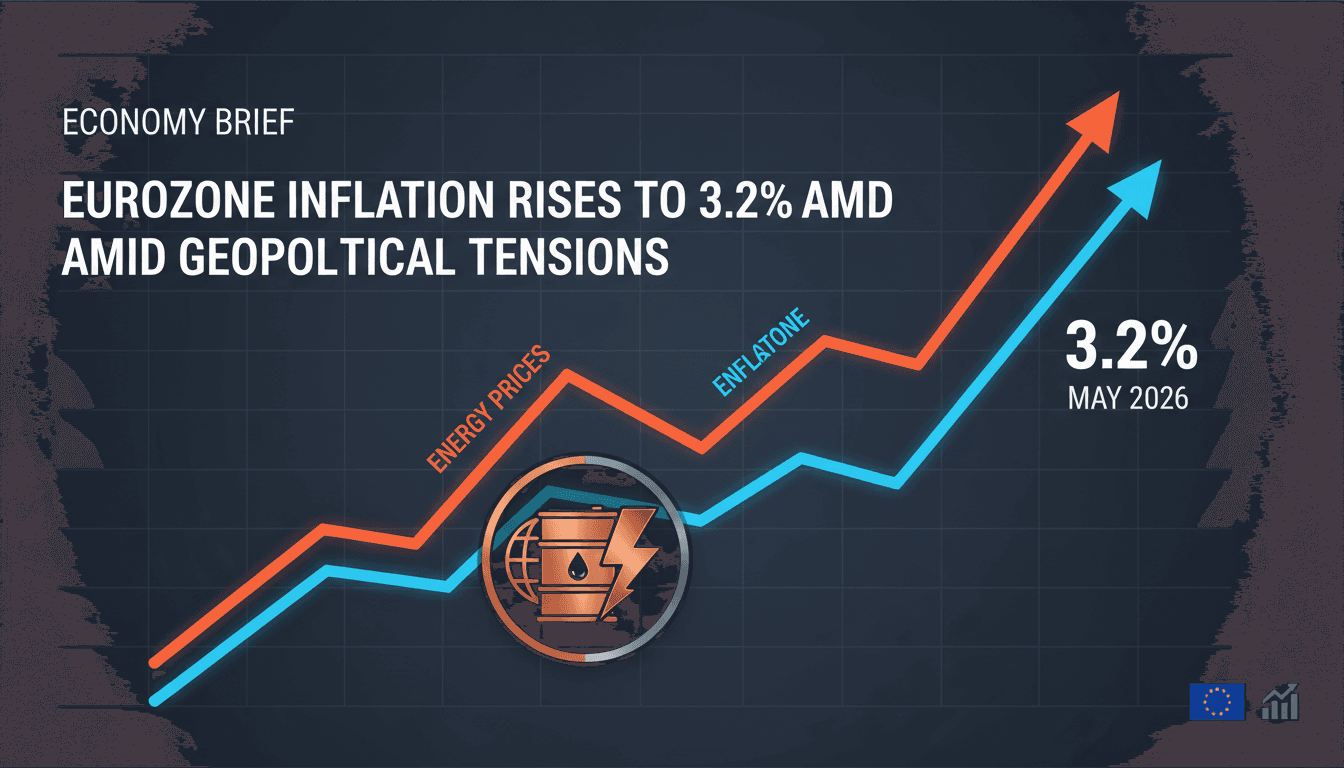
Eurozone inflation rises to 3.2% amid geopolitical tensions
Here's what it means for you.
The recent rise in Eurozone inflation to 3.2% signals significant economic pressure, primarily driven by escalating energy costs. This trend could impact consumer spending and overall economic growth, prompting the European Central Bank (ECB) to consider an interest rate hike. Stakeholders in the market should prepare for potential shifts in monetary policy that could influence investment strategies and financial planning. As inflation continues to climb, businesses and consumers alike may face increased costs, affecting purchasing power and economic stability. The ECB's response will be crucial in navigating these challenges and maintaining confidence in the Eurozone economy.
What happened
In May 2026, inflation in the Eurozone reached 3.2%, marking the highest level since September 2023. This increase represents the fourth consecutive monthly rise in inflation, underscoring a persistent trend. The surge is largely attributed to elevated energy prices, particularly those linked to ongoing geopolitical conflicts involving Iran.
The European Central Bank is now under pressure to respond to these inflationary pressures. Analysts expect that the ECB will consider an interest rate hike in its upcoming meeting to stabilize the economy and combat rising costs.
The Context
The rise in inflation is a significant concern for the Eurozone, as it reflects broader economic challenges exacerbated by geopolitical tensions. The ongoing conflict involving Iran has led to increased energy costs, which are a primary driver of the current inflation rate. This situation places the ECB in a critical position as it navigates the balance between controlling inflation and supporting economic growth.
The timing of this inflation spike is particularly notable, as it comes just ahead of the ECB's scheduled meeting to discuss monetary policy. Stakeholders are closely monitoring these developments, as the decisions made by the ECB will have far-reaching implications for the Eurozone's economic landscape.
Takeaway
Looking ahead, the ECB's upcoming interest rate decision will be pivotal in addressing the inflationary pressures facing the Eurozone. Market participants should keep a close eye on the central bank's actions and any further developments in energy prices due to geopolitical tensions. The potential for an interest rate hike could influence borrowing costs and consumer behavior in the coming months.
As inflation continues to rise, the ECB's response will be critical in shaping economic stability in the Eurozone. The implications for growth and consumer spending will be significant, making this a key moment for policymakers and market observers alike.
Global business headlines with AI angles.
"General business outlet that frequently covers AI."
— A47 Editor
Euro Zone Inflation Climbs To 3.2% As Iran War Keeps Energy Prices Elevated
Euro zone inflation has risen to 3.2%, driven by escalating oil and gas prices linked to the ongoing conflict in Iran. This increase in energy costs has resulted in varied inflationary pressures across different member states of the euro area.
Social/economic commentary and analysis relevant to business and markets.
"WSJ blends data-driven economic insight with commentary on policy and society."
— A47 Editor
Eurozone Inflation Climbs Further, Paving Way for ECB Rate Hike
Eurozone inflation has risen to 3.2% in May 2026, marking the fourth consecutive increase and the highest level since September 2023. This surge in inflation is primarily attributed to escalating energy prices, exacerbated by geopolitical tensions, p...
Editor-curated FT homepage stories spanning markets, business, world, and opinion.
"The Financial Times is a globally respected business publication with a centrist/center-left tone and strong markets focus."
— A47 Editor
Eurozone inflation rises to 3.2% in May as ECB prepares to raise rates
Eurozone inflation has risen to 3.2% in May, marking the highest level in nearly three years, primarily driven by an energy shock linked to ongoing geopolitical tensions in the Middle East. This increase in prices has prompted the European Central Ba...
Key macro releases (CPI, jobs, PMIs), surprise indexes, and market implications.
"Great for data-print awareness and instant read-through to rates and risk assets."
— A47 Editor
Euro zone inflation rises to 3.2% in May, matching forecasts
Euro zone inflation rose to 3.2% in May 2026, aligning with forecasts and reflecting ongoing economic pressures. This increase in inflation is attributed to various factors, including rising energy prices and geopolitical tensions, which have been im...
Pan-Arab news coverage spanning politics, business, sports, and regional affairs.
"Asharq Al-Awsat reflects a broad Arab editorial perspective with strong attention to regional geopolitics."
— A47 Editor
التضخم عند 3.2 % يختبر «المركزي الأوروبي» الأسبوع المقبل
Inflation in the Eurozone accelerated to 3.2% last month, driven by rising energy and service costs, which intensifies pressure on the European Central Bank.
Global markets, investing, and macroeconomics from a premier financial newsroom.
"Bloomberg is respected for in-depth financial reporting and data-driven analysis."
— A47 Editor
Euro-Zone Inflation Surpasses 3% for First Time Since 2023
Euro-area inflation has surpassed 3% for the first time since 2023, raising expectations for an interest rate hike by the European Central Bank (ECB) in its upcoming meeting. This increase marks a significant shift in the economic landscape, reflecti...