
U.S. stock markets reach record highs amid AI enthusiasm and geopolitical tensions
Here's what it means for you.
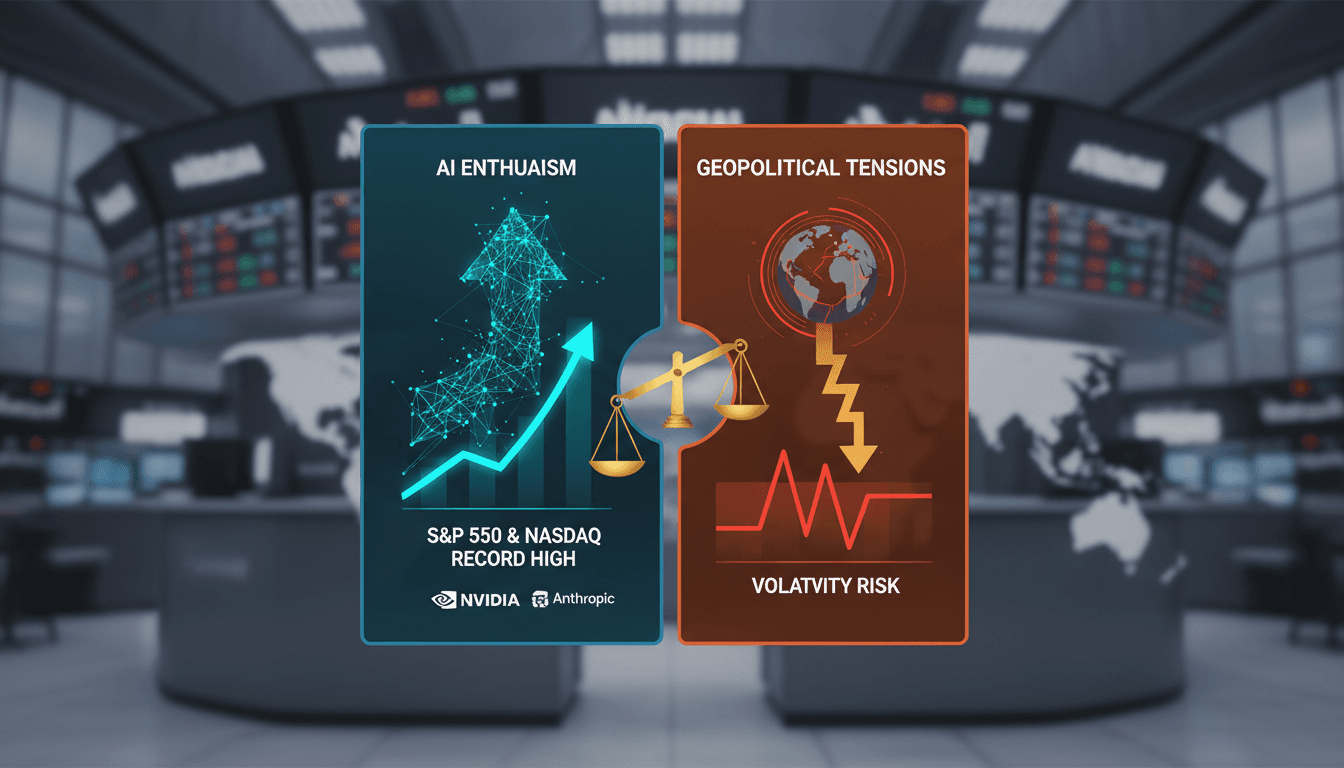
The recent surge in U.S. stock markets highlights the growing investor confidence in artificial intelligence, particularly driven by key players like Nvidia and Anthropic. This trend suggests that AI advancements could play a pivotal role in shaping market dynamics moving forward. However, the backdrop of geopolitical tensions, especially in the Middle East, introduces an element of uncertainty that investors must navigate carefully. As the market continues to reach new heights, professionals and policymakers alike should remain vigilant about the potential impacts of external factors on investor sentiment and stock performance.
What happened
U.S. stock markets have closed higher for five consecutive sessions, achieving new record highs amid excitement surrounding artificial intelligence. This upward trend is largely attributed to strong performances from companies such as Nvidia and Anthropic, which have captured investor interest. Despite this positive momentum, ongoing geopolitical concerns in the Middle East are creating mixed signals in stock futures.
The market's recent performance underscores a robust bullish trend, with investors weighing the implications of AI developments against the backdrop of global tensions. As a result, stock futures are indicating potential small losses, reflecting a cautious approach among investors.
The Context
The current surge in stock prices is significantly influenced by Nvidia's strong performance, which has been a key driver of AI-related market enthusiasm. Additionally, Anthropic's recent filing to go public has further fueled investor interest in AI stocks, positioning these companies at the forefront of the market's growth narrative.
However, the excitement surrounding AI investments is juxtaposed with concerns over geopolitical instability in the Middle East, creating a complex environment for investors. As these competing influences play out, the market's trajectory remains uncertain, necessitating close monitoring of both AI developments and geopolitical events.
Takeaway
Looking ahead, the ongoing fervor for AI may continue to drive market performance, but investors should remain alert to the potential for volatility stemming from geopolitical tensions. Monitoring developments in AI companies will be crucial, as their market impact could shape future investment strategies.
Additionally, keeping an eye on geopolitical events in the Middle East will be essential for understanding how these factors might influence investor sentiment and stock performance in the coming weeks.
Market-moving headlines impacting equities, bonds, and related risk assets.
"Real-time catalysts and volatility drivers across indices and sectors."
— A47 Editor
Wall St ends modestly higher as AI zeal overcomes Middle East jitters
Wall Street concluded the trading session modestly higher, buoyed by enthusiasm for artificial intelligence (AI) advancements, which helped to mitigate concerns stemming from ongoing tensions in the Middle East.
Markets desk coverage, trading insights, and investor updates.
"WSJ’s markets reporting provides in-depth analysis and context for investors."
— A47 Editor
U.S. Stock Futures Dip as Investors Weigh AI Fervor Against Mideast Worries
U.S. stock futures are indicating small losses as investors navigate the contrasting dynamics of enthusiasm for artificial intelligence (AI) and rising geopolitical tensions in the Middle East. This comes as markets in Europe and Asia show a more pos...
Markets desk coverage, trading insights, and investor updates.
"WSJ’s markets reporting provides in-depth analysis and context for investors."
— A47 Editor
Stock Market Today: Investors Weigh AI Fervor Against Mideast Worries
The stock market reached new record highs for the fifth consecutive session, driven by strong investor enthusiasm for artificial intelligence (AI) advancements, despite ongoing geopolitical tensions in the Middle East.
Markets desk coverage, trading insights, and investor updates.
"WSJ’s markets reporting provides in-depth analysis and context for investors."
— A47 Editor
Stock Market Today: Nvidia Fuels AI Enthusiasm; Oil Rises
The stock market reached new heights as Nvidia's advancements in artificial intelligence (AI) fueled investor enthusiasm, coinciding with Anthropic's filing to go public. This surge reflects a broader trend of increasing interest in AI technologies, ...