
Eisenkot Outlines Security Framework for Syria and Lebanon Following Mandate to Form Israeli Government
Why it matters
The operational framework signals long-term military friction and strict security conditionalities across Syria and Lebanon, dampening expectations of a rapid economic reopening or logistical integration in the northern Levant.
What happened (in 30 seconds)
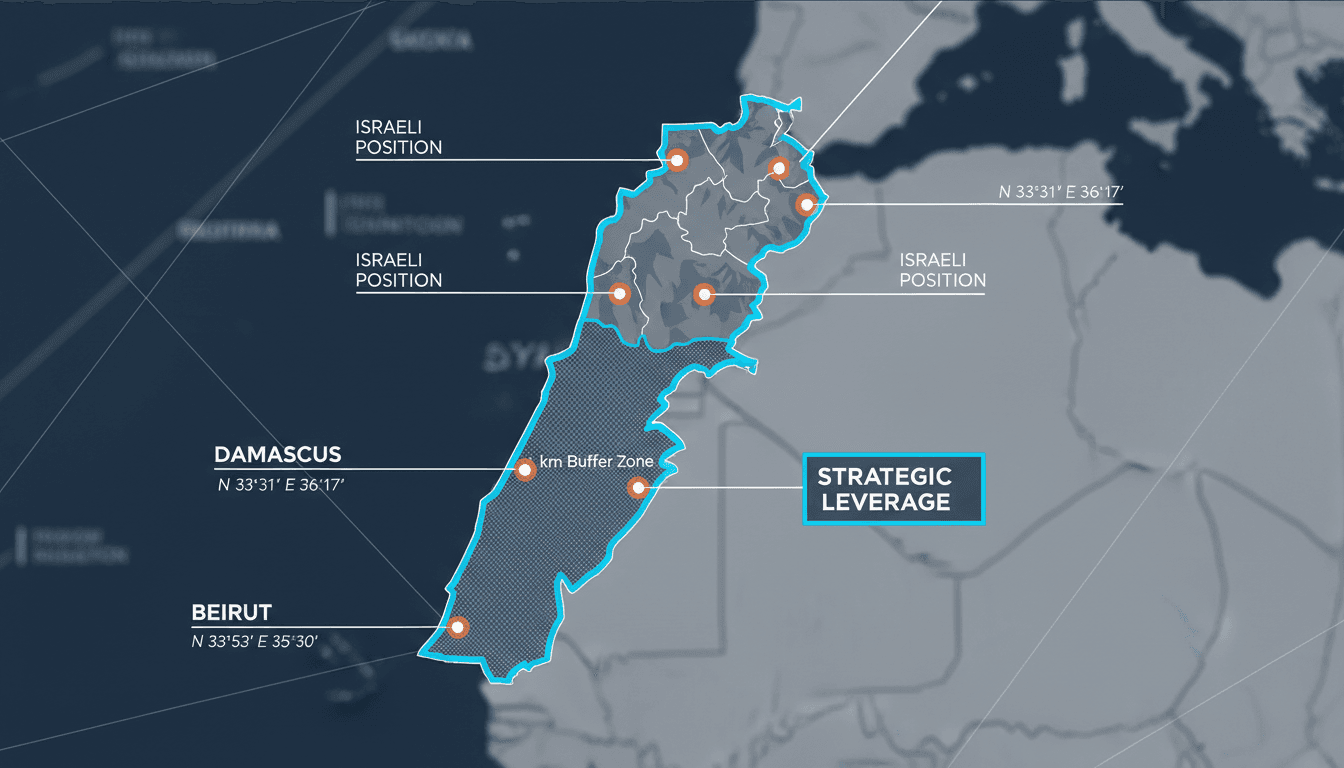
* Eisenkot tasked with forming a government: On November 8, 2026, Israeli President Isaac Herzog mandated former IDF Chief of Staff and Yashar party leader Gadi Eisenkot to assemble a new coalition following October elections. * Revision of the 1974 disengagement terms: Eisenkot outlined an updated regional policy requiring the withdrawal of Russian and Turkish forces from Syria, stronger US guarantees, and the retention of strategic positions such as Mount Hermon as negotiating leverage. * Retention of border security zones: Analysis indicates continued reliance on forward-deployed positions, including a proposed 8 km security zone in southern Lebanon designed to counteract direct anti-tank missile trajectories.
The context you actually need
* Architect of structural military doctrines: As a former military chief, Eisenkot developed the Dahiya doctrine and managed the "campaign between wars," operational approaches centered on deterrence through disproportionate force and preventative counter-escalation. * Transition dynamics in post-Assad Syria: Following the collapse of the Assad administration, Israel advanced into adjacent southern Syrian zones, treating positions like Mount Hermon not as permanent annexations, but as explicit bargaining chips against Damascus leadership led by Ahmed Sharaa. * Failed security handoffs in Lebanon: Operational assessments cited deficiencies in transferring territorial enforcement to the Lebanese armed forces in southern border towns, reinforcing Israeli strategic preferences for continuous tactical surveillance over unconditional withdrawals.
What's really happening
The political mandate granted to Gadi Eisenkot reflects an incentive structure prioritizing tactical risk minimization over diplomatic pace. While political transitions in Jerusalem frequently generate expectations of strategic realignment, the operational blueprint presented by the Yashar party leader highlights structural continuity with the defense posture of Benjamin Netanyahu's tenure. Rather than planning rapid troop pullbacks following the fall of the Assad regime, Israeli defense planning focuses on establishing hard-line spatial limits along its northern periphery.
The mechanics of this strategy depend on retaining geographic leverage. By holding tactical commanding heights, specifically Mount Hermon, Israel establishes a non-negotiable physical asset to deploy against the post-Assad government in Damascus. Eisenkot’s public distrust of Syrian President Ahmed Sharaa, rooted in past extremist affiliations, incentivizes a hedge against regional instability. Damascus cannot secure an Israeli pullback under an updated 1974 disengagement treaty without agreeing to strict conditions: the verified eviction of foreign militaries, particularly Russian and Turkish contingents, alongside US-backed compliance enforcement. This shifts the diplomatic burden entirely onto Syria’s transitional authority.
In Lebanon, the approach operates on identical spatial calculus. The primary threat vector identified along the northern frontier is direct-fire anti-tank guided missiles targeting civilian and military infrastructure. Addressing this capability requires depth. A proposed 8 km security perimeter inside southern Lebanon serves to physically distance guided munitions from Israeli border settlements. Because operational reviews concluded that the Lebanese military has struggled to enforce exclusive authority over southern towns, Israeli defense planning treats physical demilitarization as a prerequisite for any calibrated troop redeployment.
Consequently, the strategic architecture does not offer immediate demilitarization. Instead, it codifies an era of conditional containment. By subordinating diplomatic settlements to strict buffer enforcement, operational freedom remains the primary defense objective. For market participants tracking Levant stability, cross-border infrastructure normalization will remain conditional on non-negotiable military buffers rather than political handshakes.
Who feels it first (and how)
* Regional Logistics and Supply-Chain Operators: Cross-border freight corridors between Lebanon, Syria, and neighboring trade hubs will operate under persistent checkpoint inspections and spatial access limits. * Infrastructure and Reconstruction Investors: Development capital earmarked for southern Syrian stabilization or Lebanese reconstruction faces sustained holding patterns until formal disengagement agreements are ratified. * Gulf Corporate Strategists and Asset Managers: Regional desks evaluating Levantine expansion will maintain conservative risk allocations, factoring sustained security zone tensions into overall Middle Eastern asset pricing.
What to watch next
* Coalition Formation Deadlines: The specific composition of Eisenkot’s governing cabinet will indicate whether unity arrangements with outgoing leadership entrench or recalibrate operational parameters. * US Diplomatic Engagement on Border Demarcations: Progress on formal multilateral talks regarding updated 1974 protocols will determine if foreign force withdrawal conditions are practically achievable. * Southern Lebanon Force Deployments: Any shifts in the operational footprint within the 8 km zone will signal whether Israel moves toward permanent standoff positions or structured, phased handovers.
President Isaac Herzog tasked Gadi Eisenkot with government formation on November 8, 2026; Eisenkot demands the withdrawal of Russian and Turkish personnel from Syria alongside an updated 1974 agreement.
The proposed 8 km buffer zone will remain an active baseline in operational planning due to ongoing concerns regarding anti-tank missile range and non-state capabilities.
Whether Syrian President Ahmed Sharaa possesses the operational leverage or diplomatic willingness to expel foreign state forces to secure Israeli withdrawal from Mount Hermon.
Frequently Asked Questions
- Why it matters?
- The operational framework signals long-term military friction and strict security conditionalities across Syria and Lebanon, dampening expectations of a rapid economic reopening or logistical integration in the northern Levant.
- What happened (in 30 seconds)?
- Eisenkot tasked with forming a government: On November 8, 2026, Israeli President Isaac Herzog mandated former IDF Chief of Staff and Yashar party leader Gadi Eisenkot to assemble a new coalition following October elections. Revision of the 1974 disengagement terms: Eisenkot outlined an updated regional policy requiring the withdrawal of Russian and Turkish forces from Syria, stronger US guarantees, and the retention of strategic positions such as Mount Hermon as negotiating leverage. Retention
- What's really happening?
- The political mandate granted to Gadi Eisenkot reflects an incentive structure prioritizing tactical risk minimization over diplomatic pace. While political transitions in Jerusalem frequently generate expectations of strategic realignment, the operational blueprint presented by the Yashar party leader highlights structural continuity with the defense posture of Benjamin Netanyahu's tenure. Rather than planning rapid troop pullbacks following the fall of the Assad regime, Israeli defense plannin
- Who feels it first (and how)?
- Regional Logistics and Supply-Chain Operators: Cross-border freight corridors between Lebanon, Syria, and neighboring trade hubs will operate under persistent checkpoint inspections and spatial access limits. Infrastructure and Reconstruction Investors: Development capital earmarked for southern Syrian stabilization or Lebanese reconstruction faces sustained holding patterns until formal disengagement agreements are ratified. Gulf Corporate Strategists and Asset Managers: Regional desks evaluati
- What to watch next?
- Coalition Formation Deadlines: The specific composition of Eisenkot’s governing cabinet will indicate whether unity arrangements with outgoing leadership entrench or recalibrate operational parameters. US Diplomatic Engagement on Border Demarcations: Progress on formal multilateral talks regarding updated 1974 protocols will determine if foreign force withdrawal conditions are practically achievable. Southern Lebanon Force Deployments: Any shifts in the operational footprint within the 8 km zone
Arabic-language coverage of international news and geopolitics.
"RT Arabic is a Russian state-funded outlet often criticized for promoting Kremlin-aligned narratives."
— A47 Editor
سوريا ولبنان بعيون آيزنكوت.. بين إعادة رسم الترتيبات الأمنية ومواصلة نهج الوجود العسكري
Former Israeli military chief Gadi Eisenkot has been tasked with forming a new Israeli government to succeed Benjamin Netanyahu, with questions raised about his approach toward Syria and Lebanon, including whether he will redraw regional security arr...
English-language reporting on Saudi politics, policy, and society.
"Saudi Gazette reflects mainstream Saudi institutional perspectives."
— A47 Editor
Israeli president tasks Netanyahu rival Eisenkot with forming new government
Israeli President Isaac Herzog on Saturday tasked opposition leader Gadi Eisenkot, head of the centrist Yashar party, with forming a new government after the October 27 election left neither his four-party bloc nor Prime Minister Benjamin Netanyahu's...
Arabic-language reporting on global and regional news.
"BBC Arabic is part of the BBC, generally regarded for editorial standards and broad international coverage."
— A47 Editor
الرئيس الإسرائيلي يكلف غادي آيزنكوت بتشكيل الحكومة
Israeli President Isaac Herzog has tasked Gantz's rival-turned-opposition figure Gadi Eisenkot, head of an opposition bloc that won the advantage in the legislative elections, with forming a new government, according to a report from BBC Arabic. The ...
UAE-based English-language newspaper covering regional politics, economics, and global affairs.
"The National reflects Emirati policy perspectives while maintaining international editorial standards."
— A47 Editor
Israeli president picks Eisenkot to form government in setback for Netanyahu
Israeli President Isaac Herzog has tasked opposition leader Gadi Eisenkot, head of the Yashar party and a former military chief, with trying to form a new government after the inconclusive October 27 national election, in which neither his bloc nor P...
Global coverage of politics, crises, and international affairs.
"HuffPost provides progressive-oriented reporting on international developments, often focusing on humanitarian and social justice issues."
— A47 Editor
Israel’s President Taps Opposition Candidate Eisenkot To Form A Government, In Setback For Netanyahu
Israeli President Isaac Herzog has tasked opposition leader Gadi Eisenkot, head of the Yashar party and a former military chief, with trying to form a new government after the inconclusive October 27 national election, in which neither Eisenkot's blo...